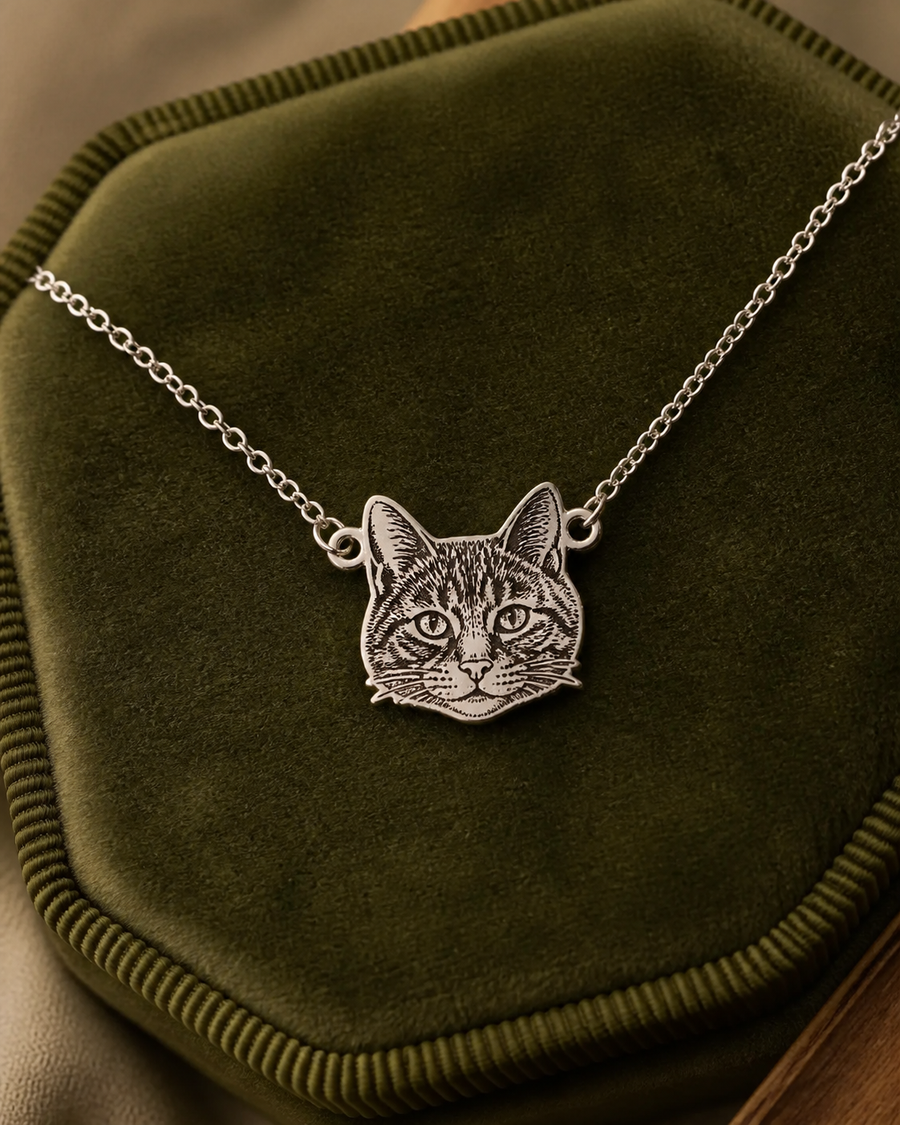
Photo Locket or Pet Portrait Necklace: Which Feels More Personal?
One keeps the photograph hidden inside; the other turns selected features into the visible shape of the piece.
One keeps the photograph hidden inside; the other turns selected features into the visible shape of the piece.
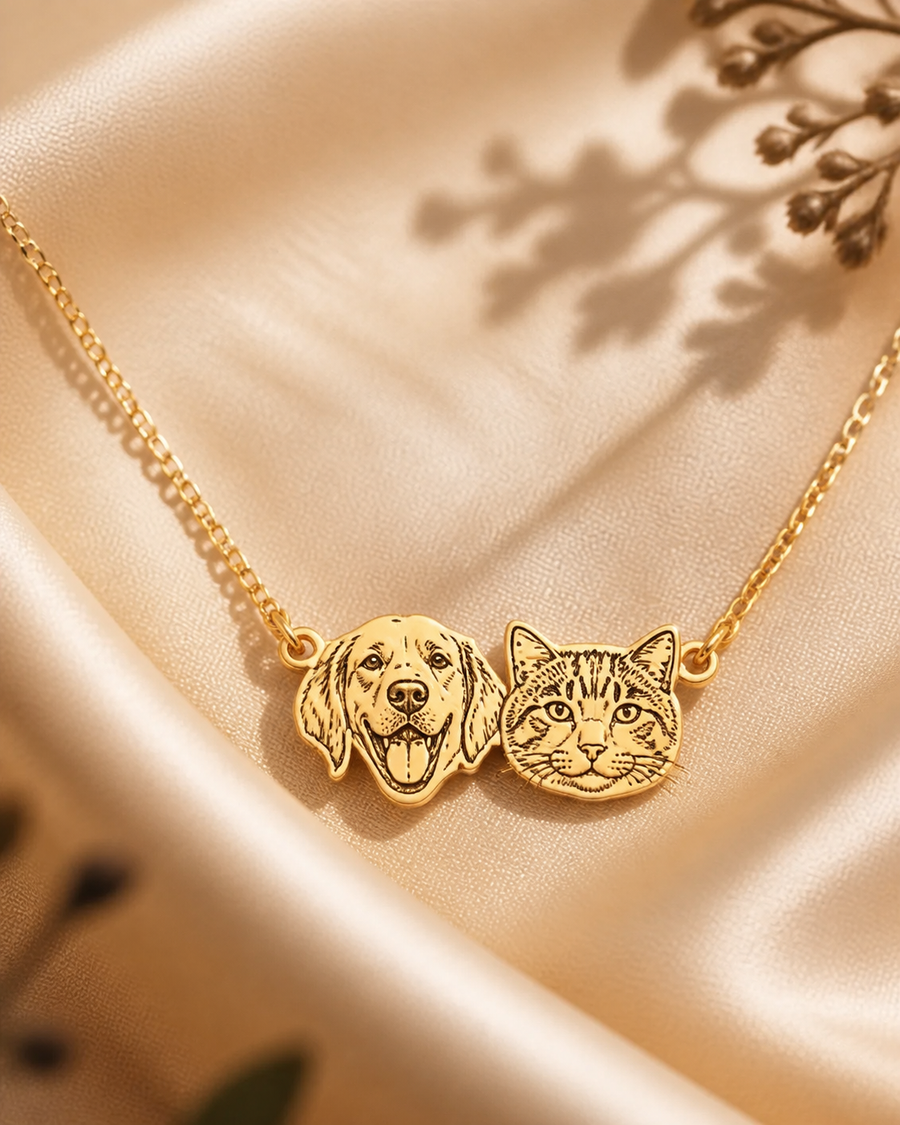
Both styles can hold a pet’s image, but they create a different visual relationship between portrait and jewelry.
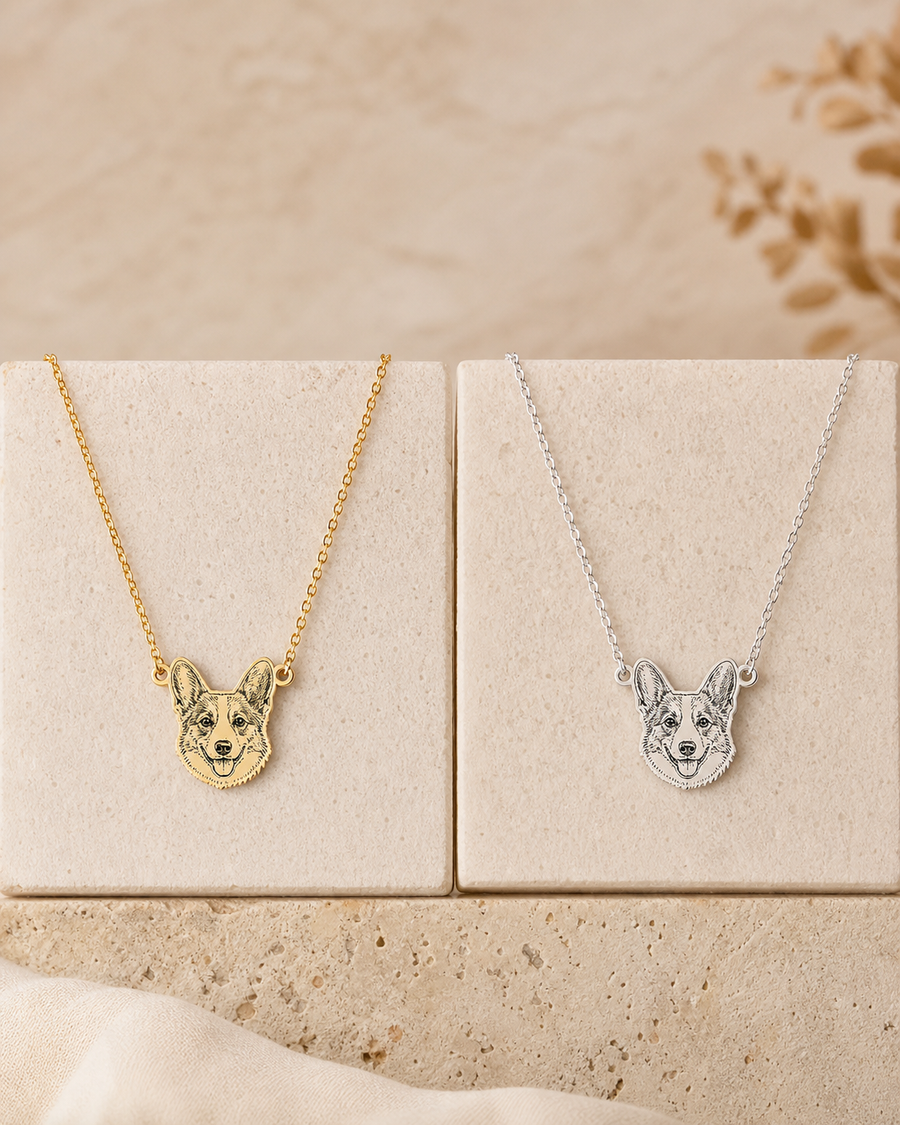
The strongest comparison is not who promises the most. It is who explains the product and process most clearly.
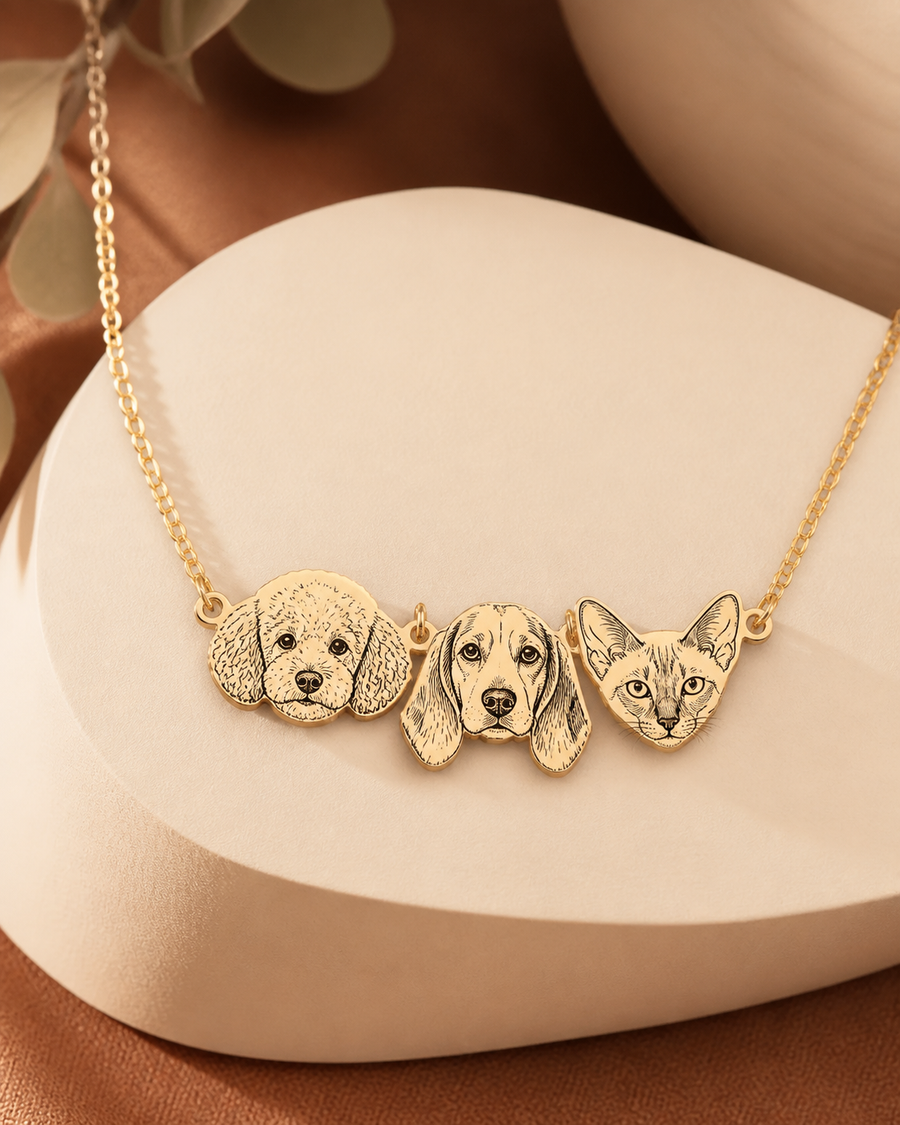
A personalized piece is easier to order when the practical limits are as clear as the possibilities.
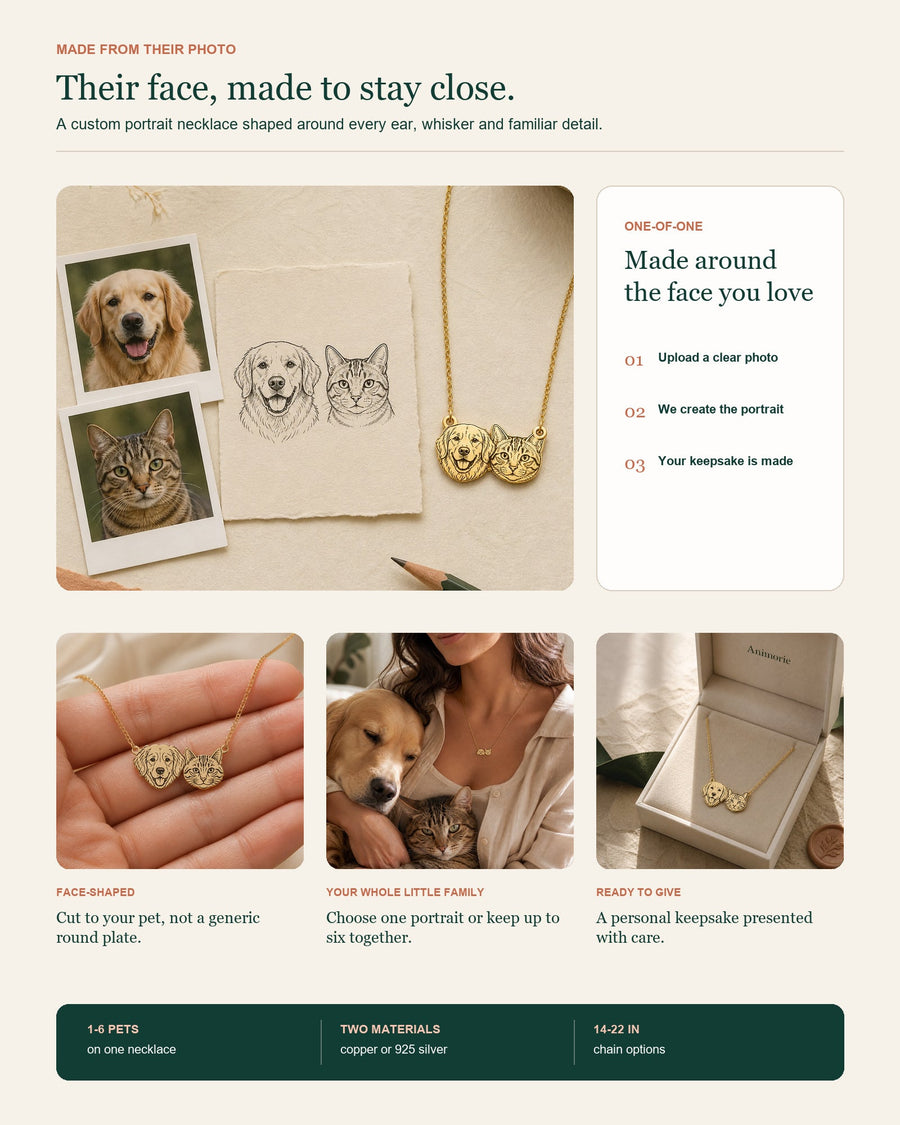
Five quiet minutes before checkout can prevent the most common misunderstandings in a made-to-order piece.
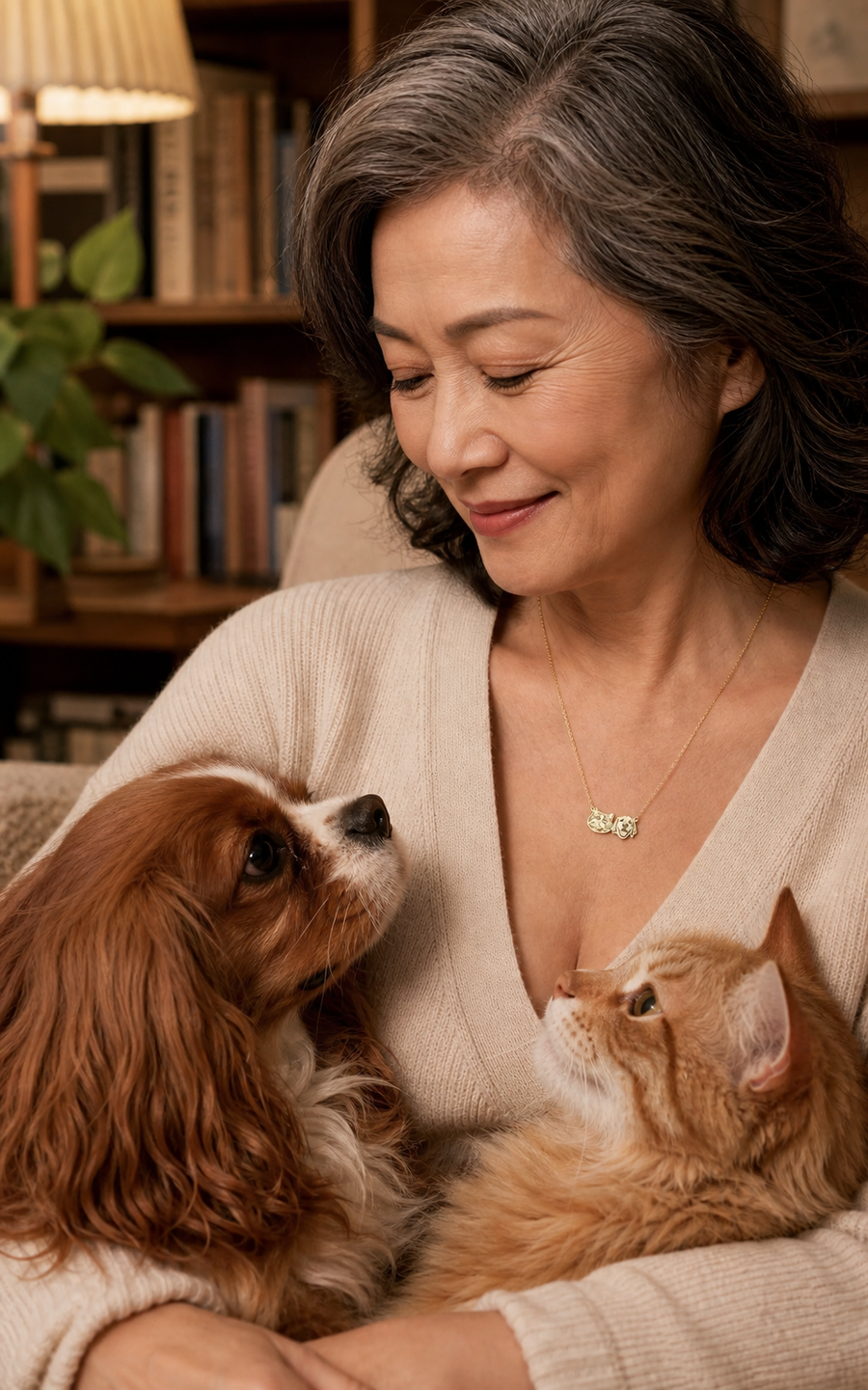
A group gift can carry real care when one person quietly coordinates the details and protects the recipient from extra decisions.
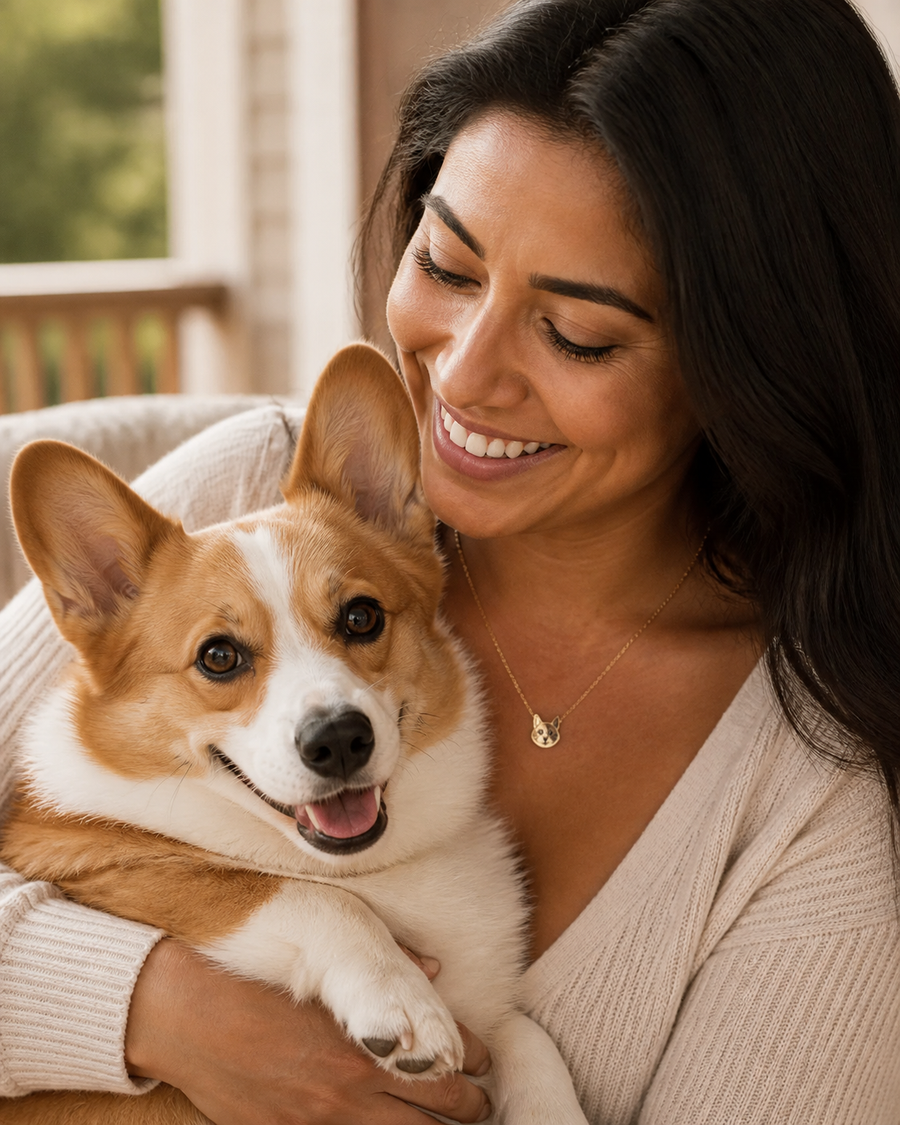
The most thoughtful first-pet gift is specific to the animal and gentle about the relationship still taking shape.
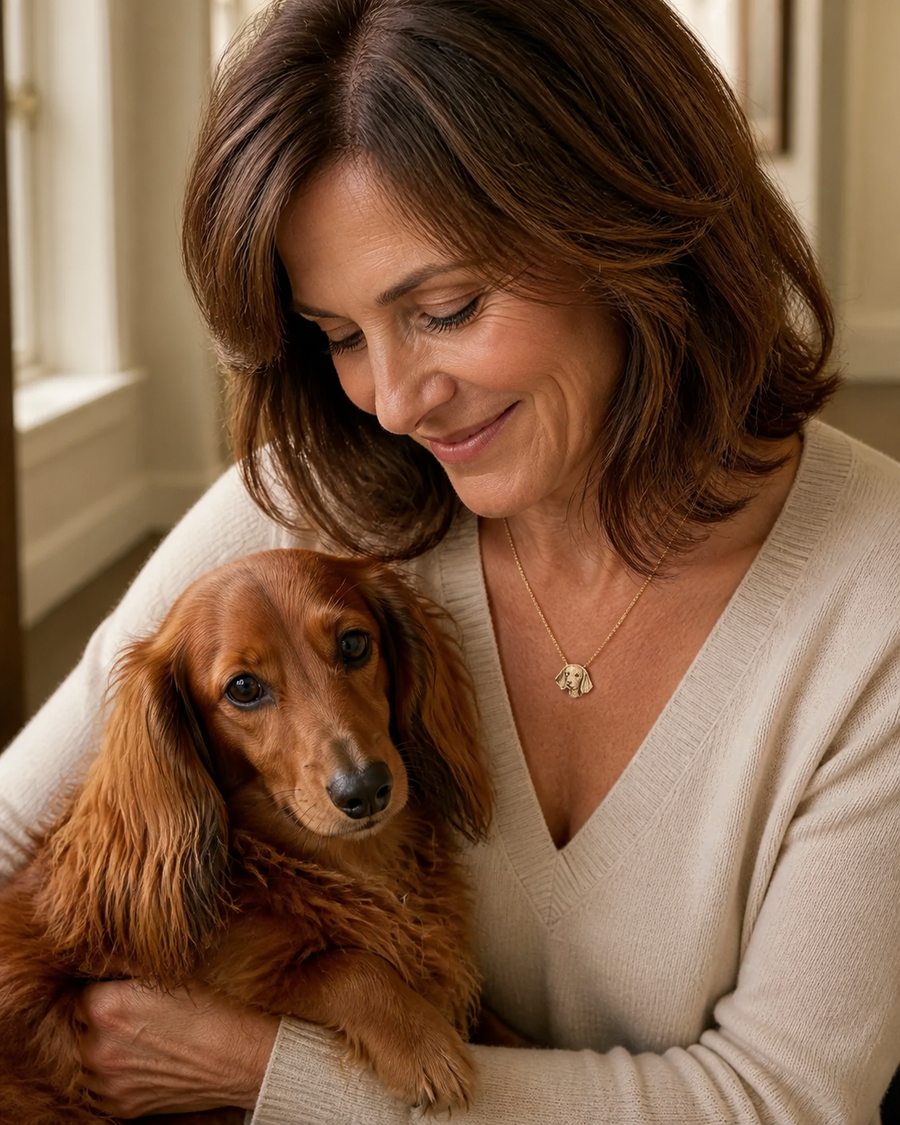
Missing a pet is often missing the rhythm of home. A familiar face can make that distance feel a little less abstract.
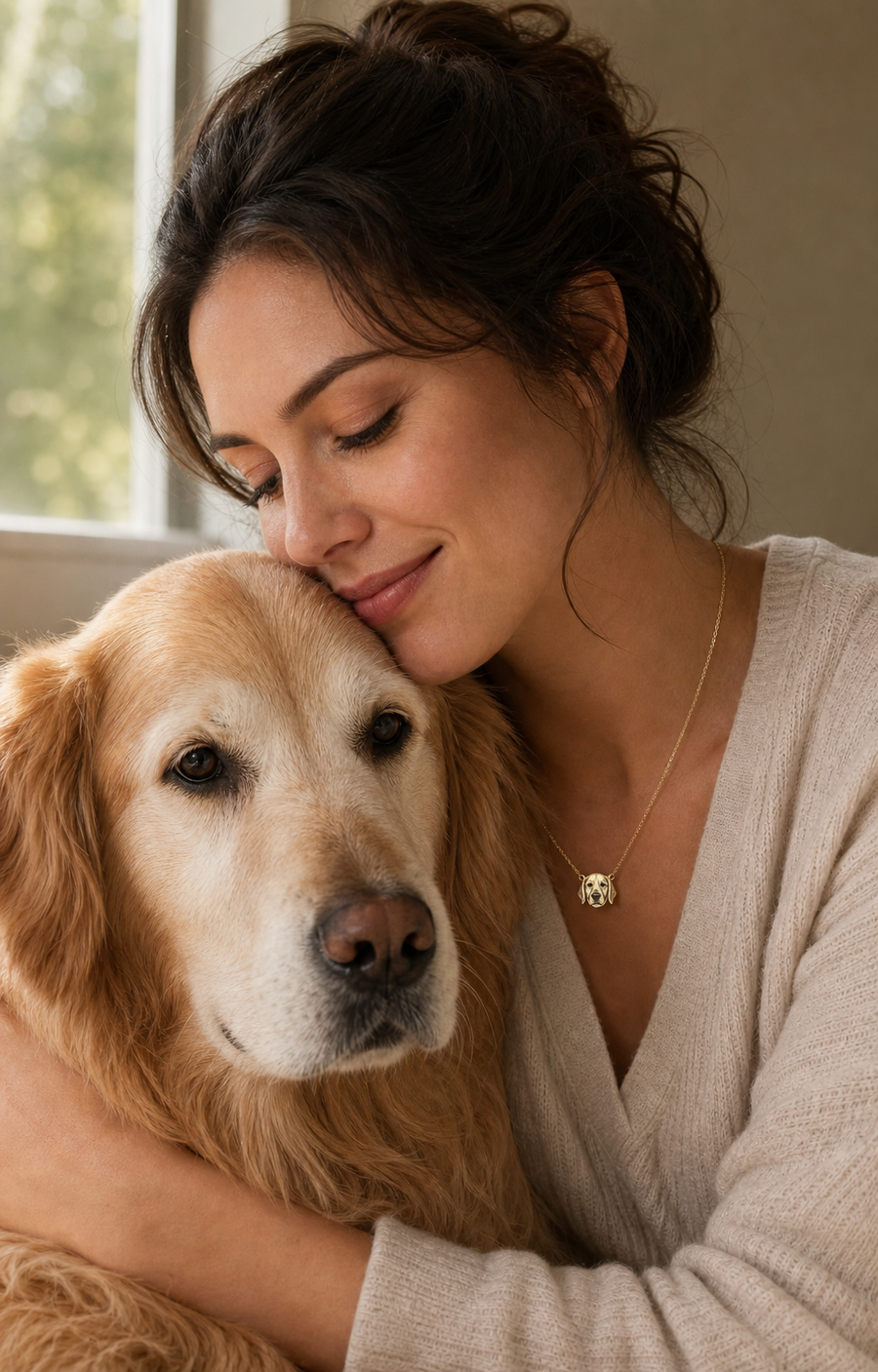
A keepsake does not have to begin with loss. It can begin with affection for the life happening now.
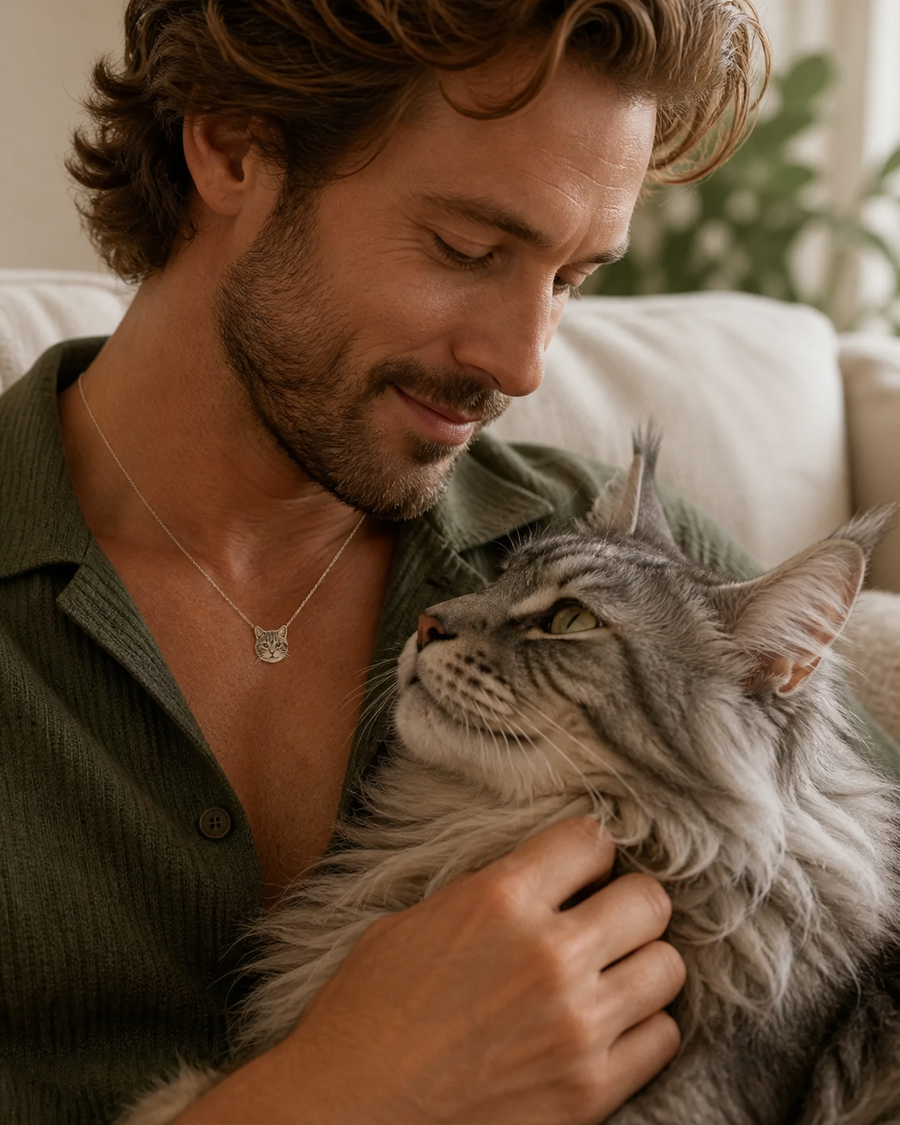
There is no universally best age. The right photograph is the one that holds the version of them you most want to keep near.
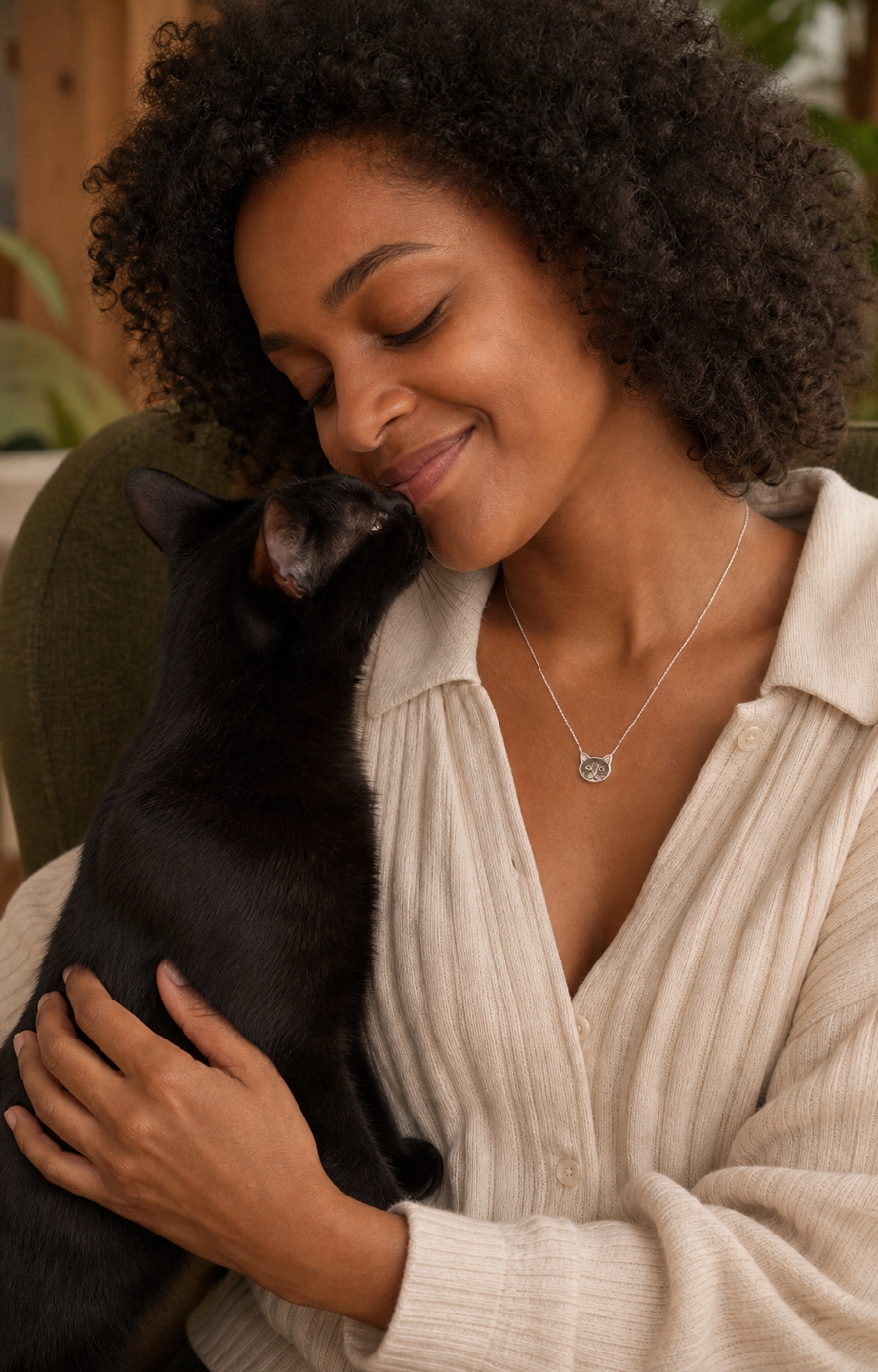
When eyes and fur share the same tone, the answer is controlled light—not an artificial filter.
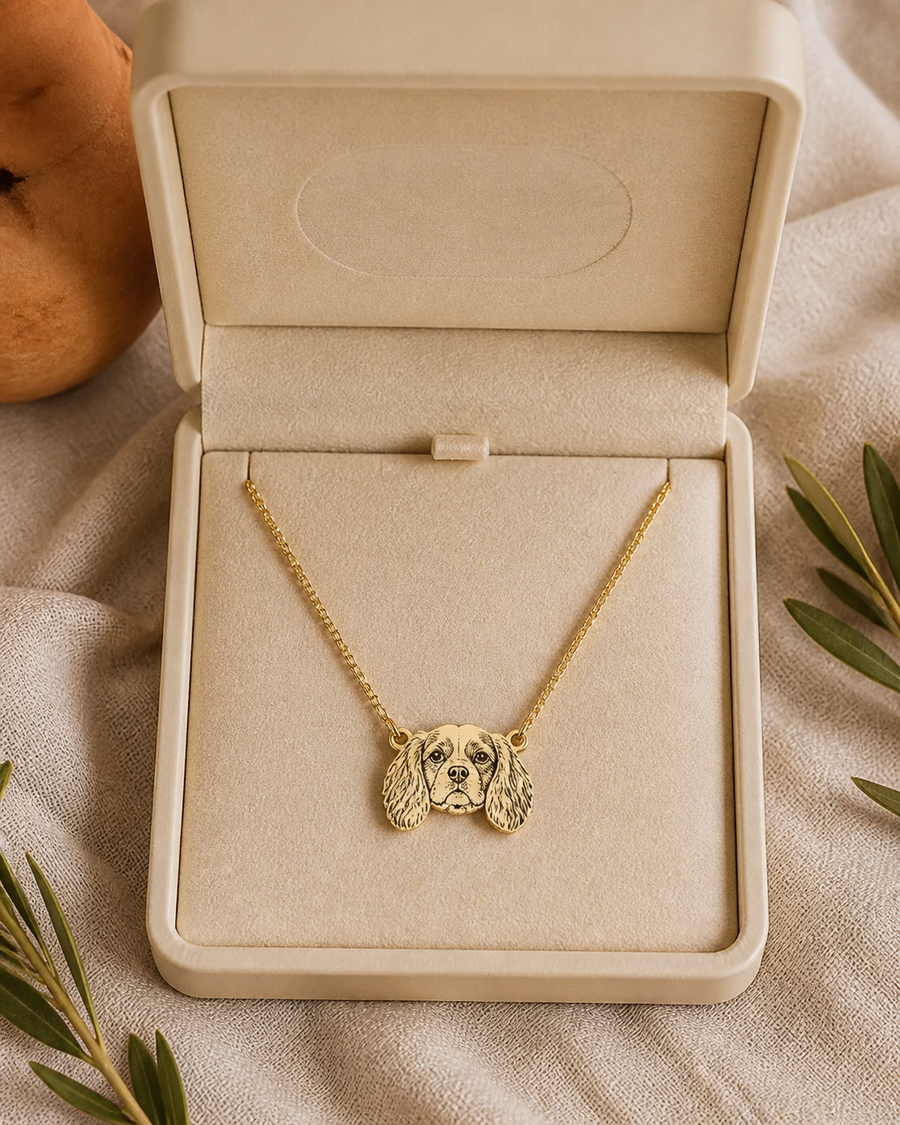
Curls carry character, but they can also hide the structure an artist needs to see.
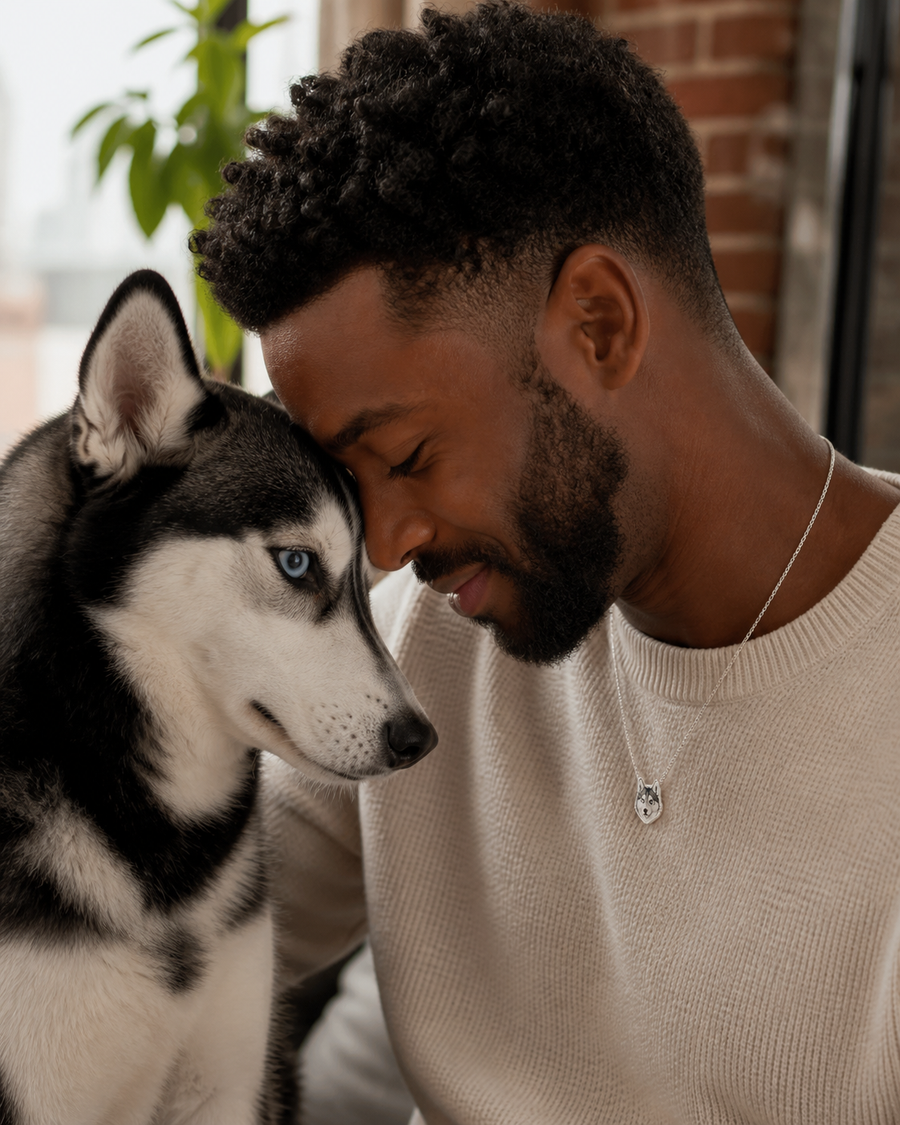
A good reference photo should not come at the cost of your pet’s sense of safety.
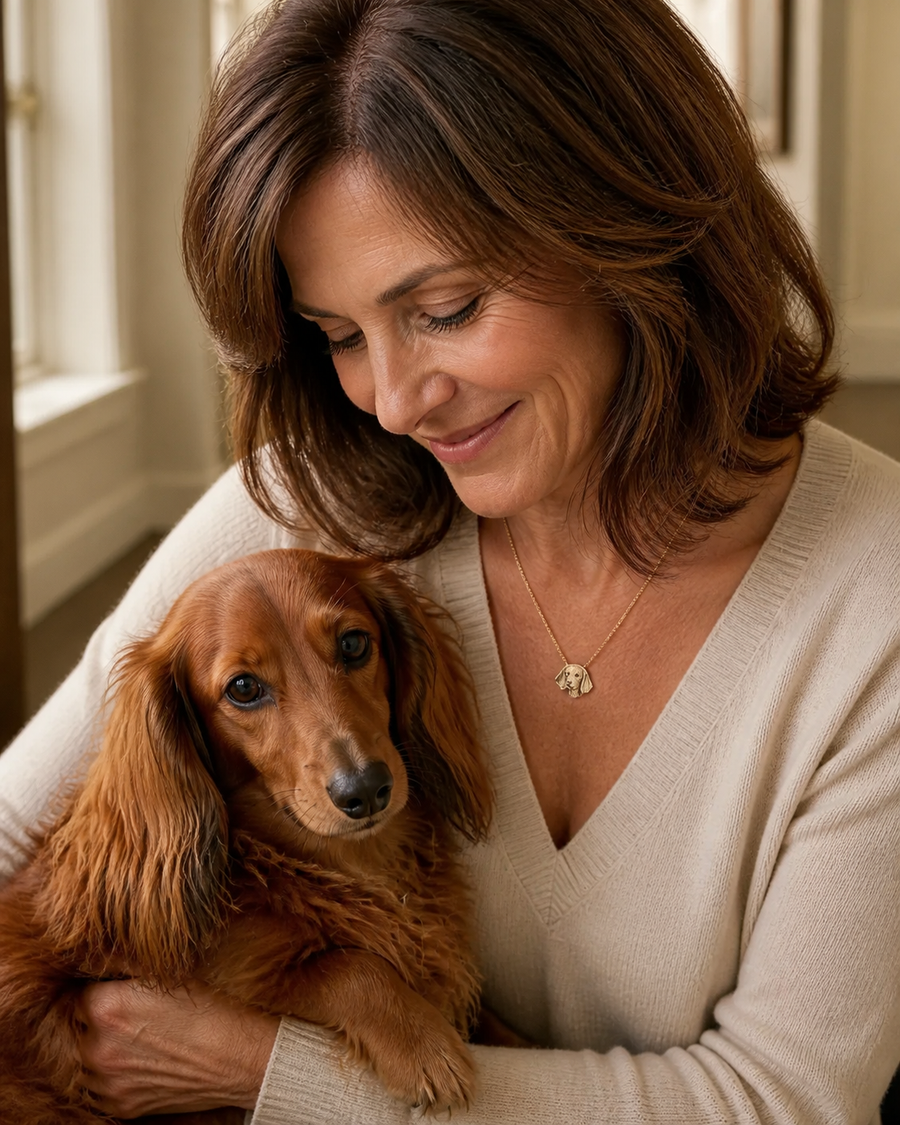
The best senior-pet portrait often begins with patience, familiar light, and no demand to perform.

A technically large image is not always the most useful reference. What matters is whether your pet can be clearly understood.
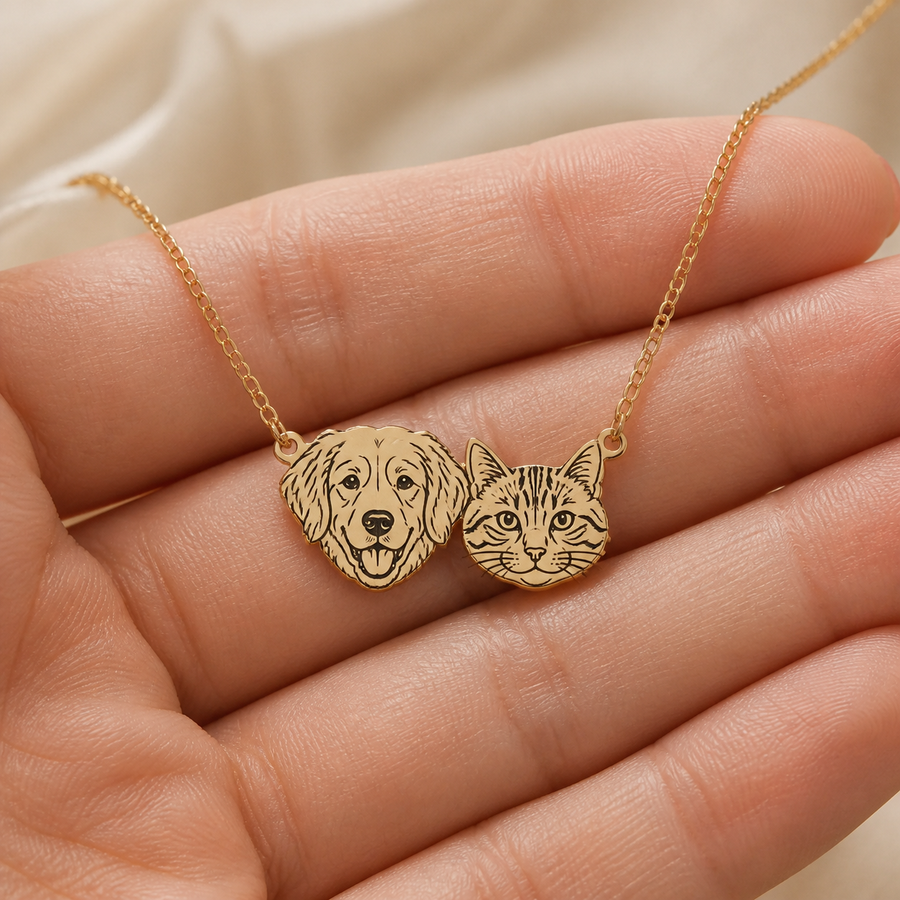
A small portrait cannot preserve every hair. Its likeness comes from choosing the right details, not drawing all of them.
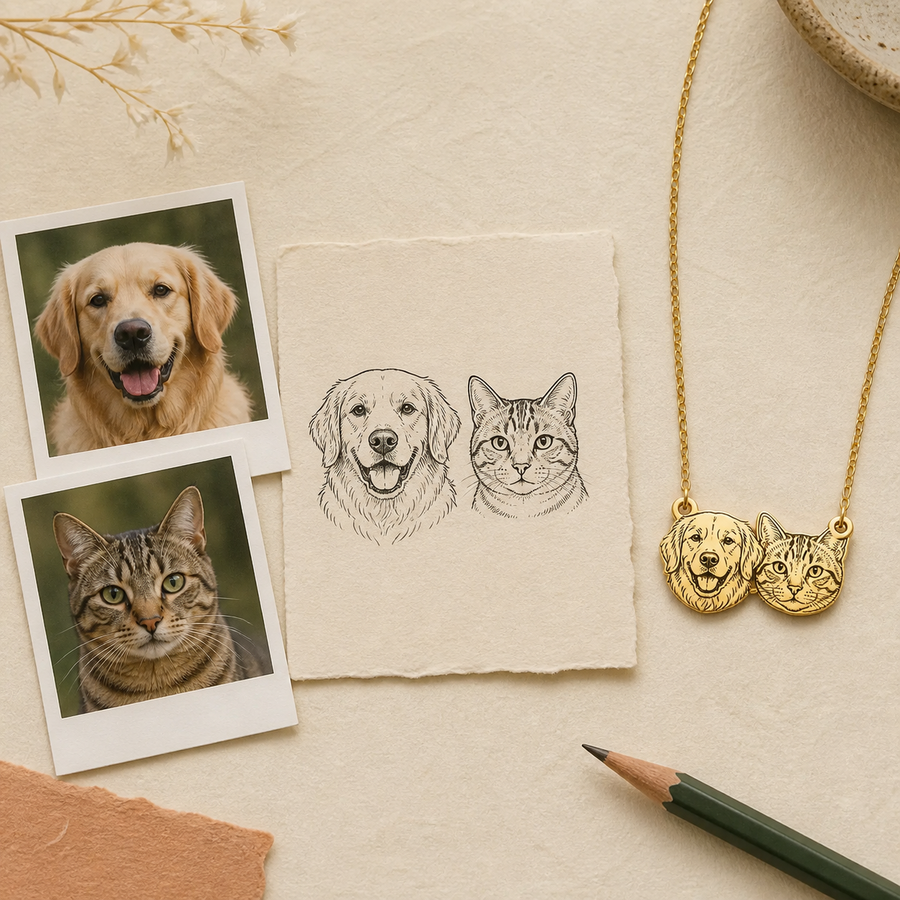
A clear, familiar phone photograph can be a stronger portrait reference than a polished image that does not feel like your pet.
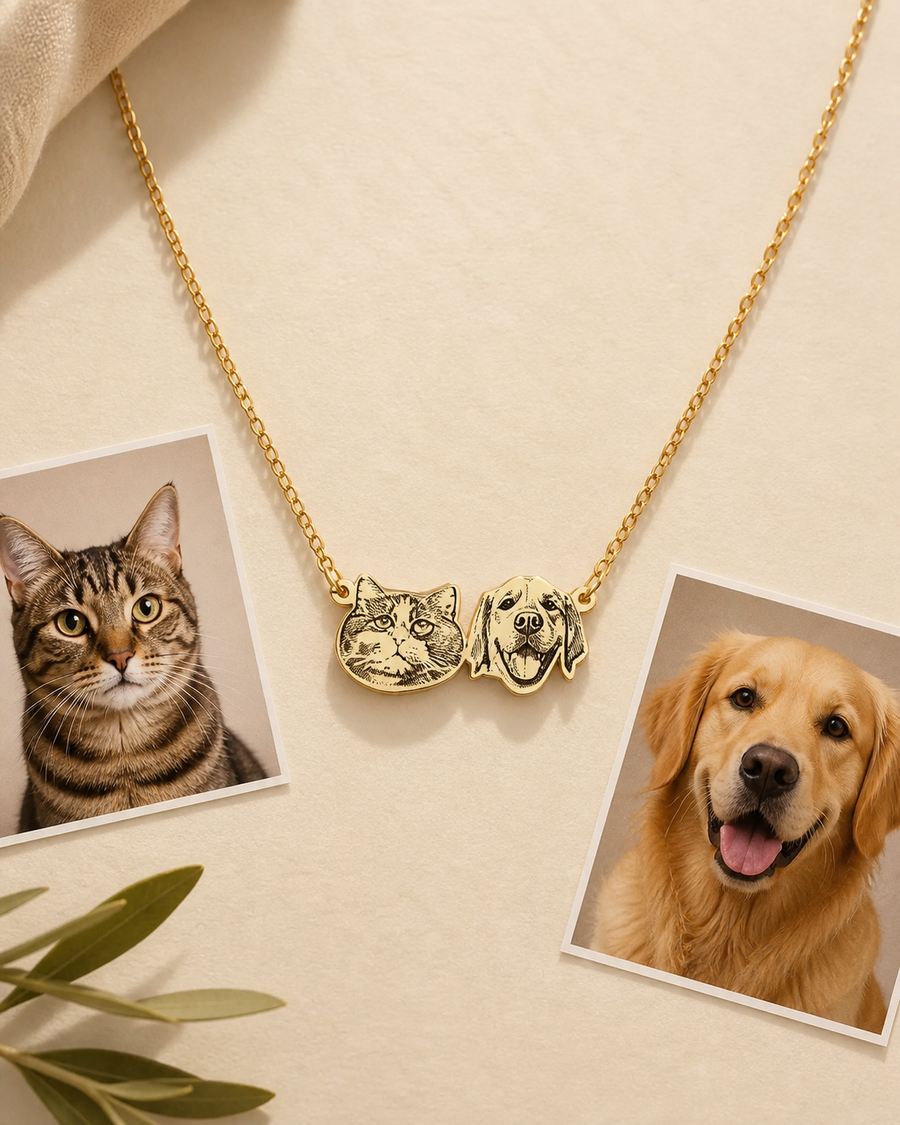
A request for another image is a quality check, not a rejection of the memory attached to the first photograph.
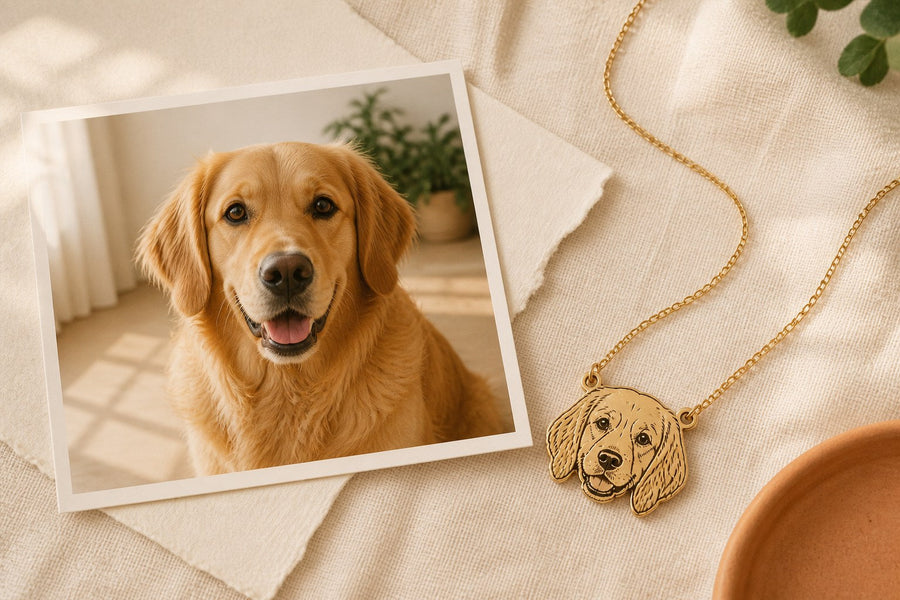
Both submission routes lead to the same custom process; the right one depends on whether your best photo is ready.
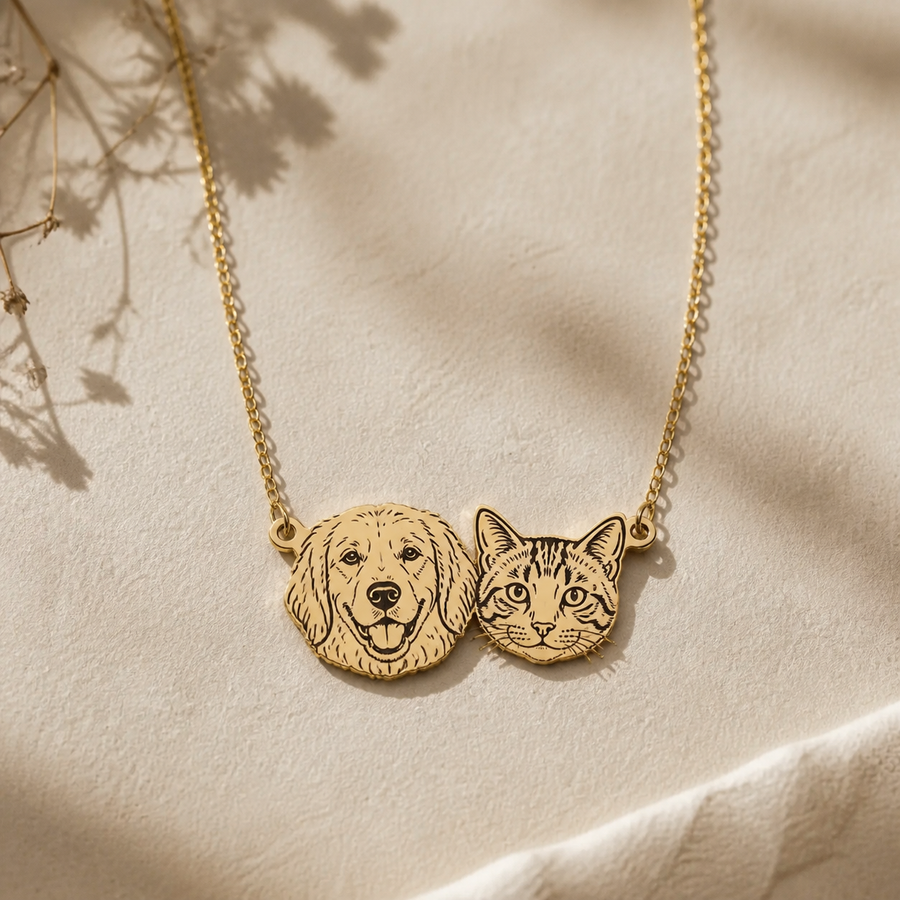
A calm, practical walkthrough for anyone ordering personalized pet jewelry for the first time.
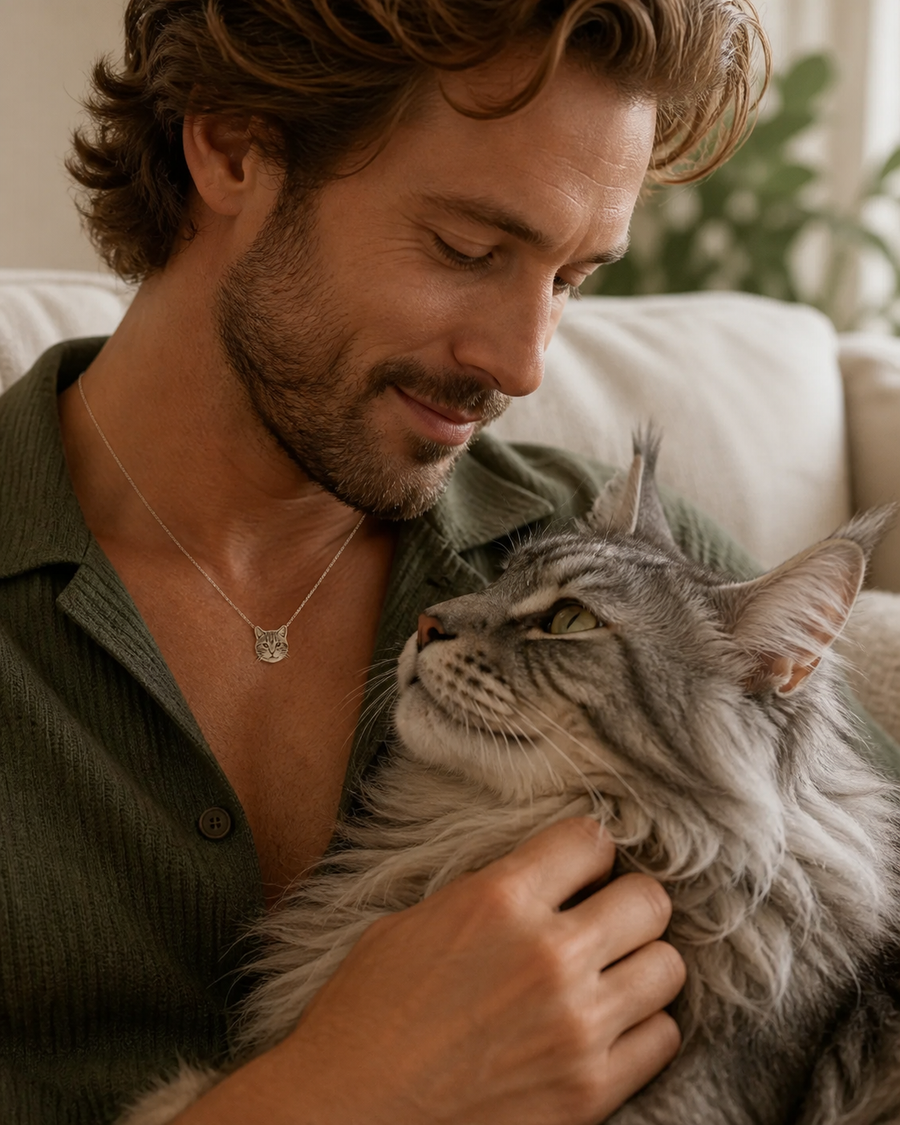
A memorial card does not need perfect language. It needs to acknowledge the pet, respect the recipient’s grief, and leave room ...
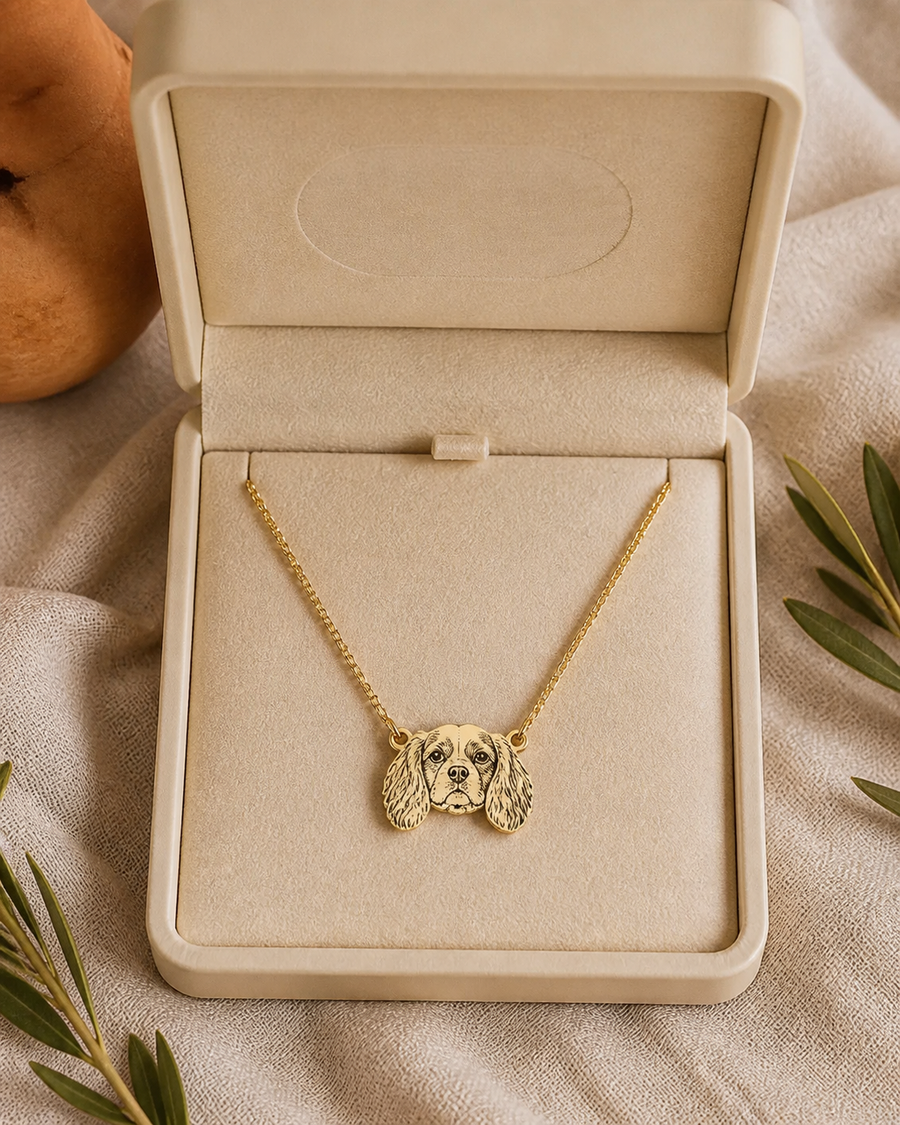
A discreet, practical plan for ordering personalized pet jewelry without spoiling the surprise or guessing at the details that ...
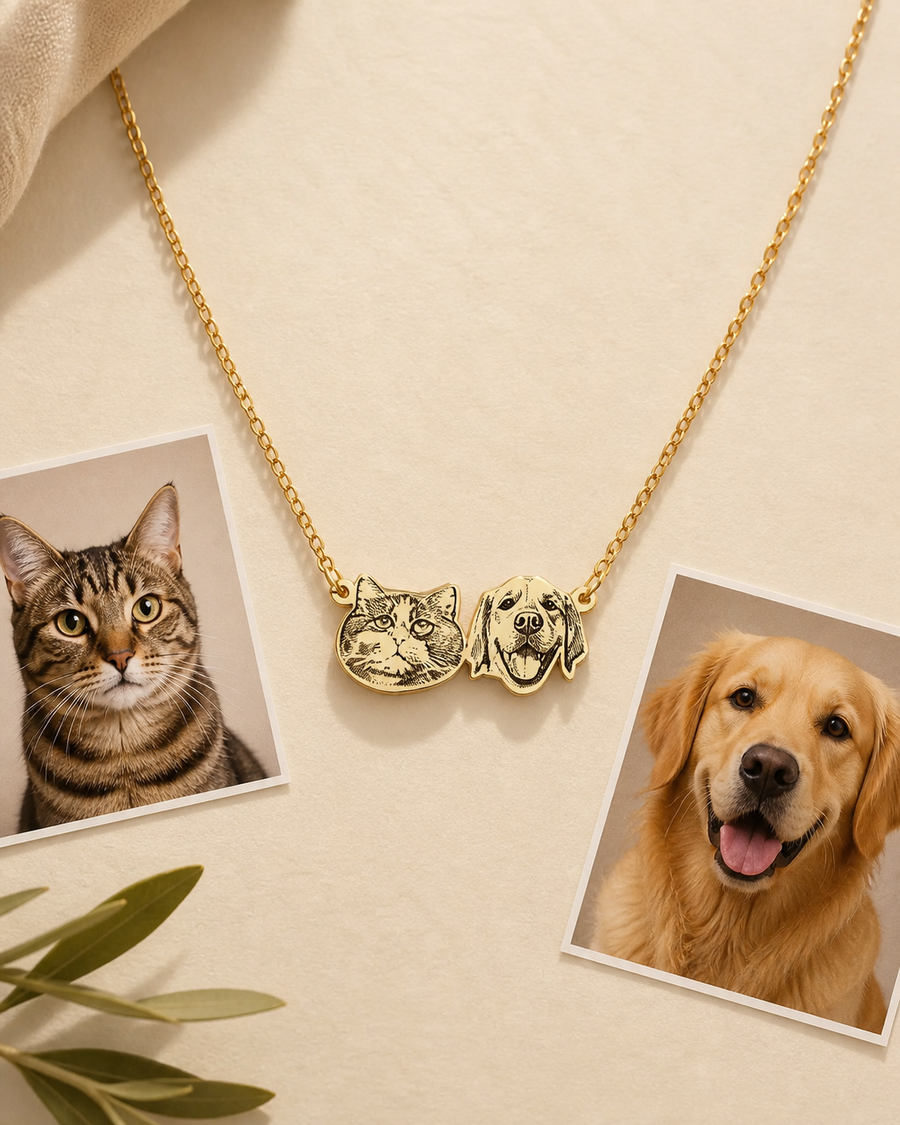
A plain-language look at how an uploaded pet photo supports a personalized order, from portrait creation to customer care.
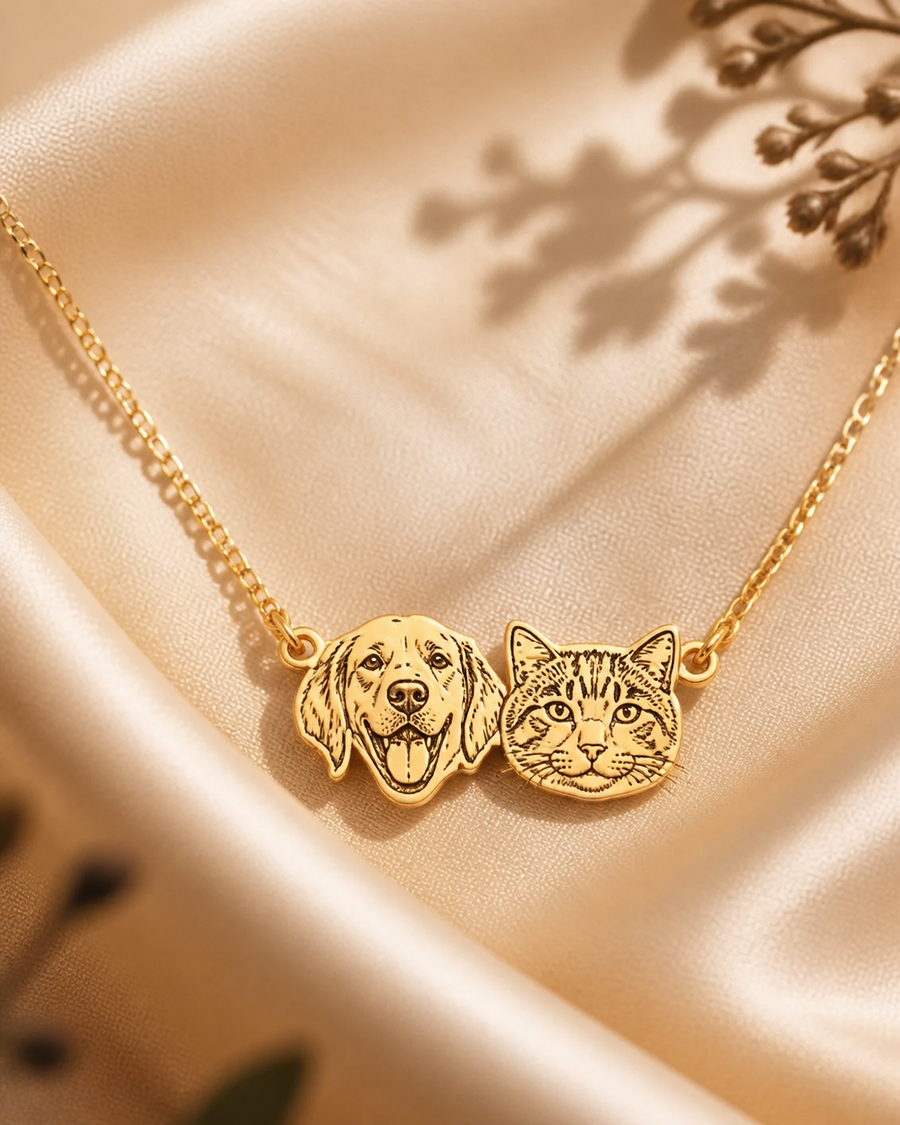
Distinctive features can make a portrait feel personal, but the photograph and the scale of the finished piece both matter.
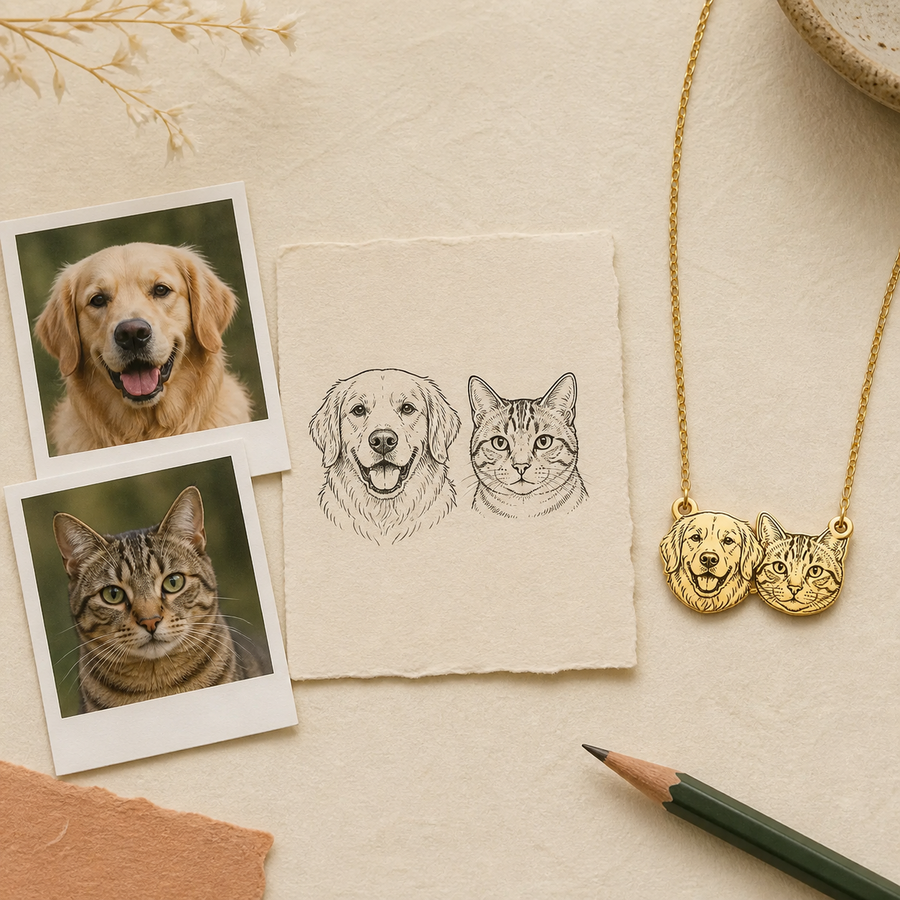
A practical guide to writing useful portrait notes without trying to describe every detail in your pet’s photograph.
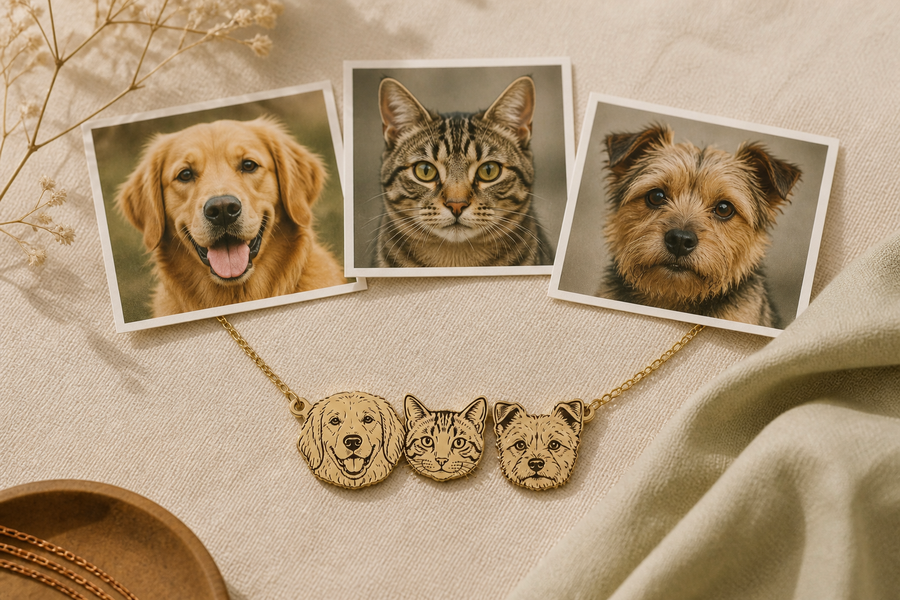
A three-photo selection method that keeps angles, lighting, age, and facial scale consistent enough for one multi-pet portrait ...
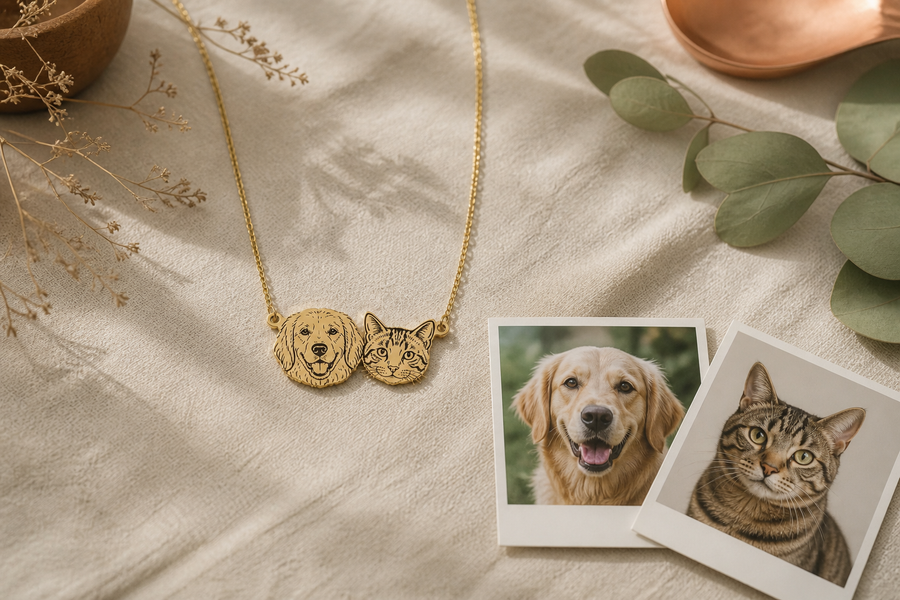
How to choose compatible dog and cat reference photos, balance scale, preserve each face, and avoid mismatched lighting in one ...
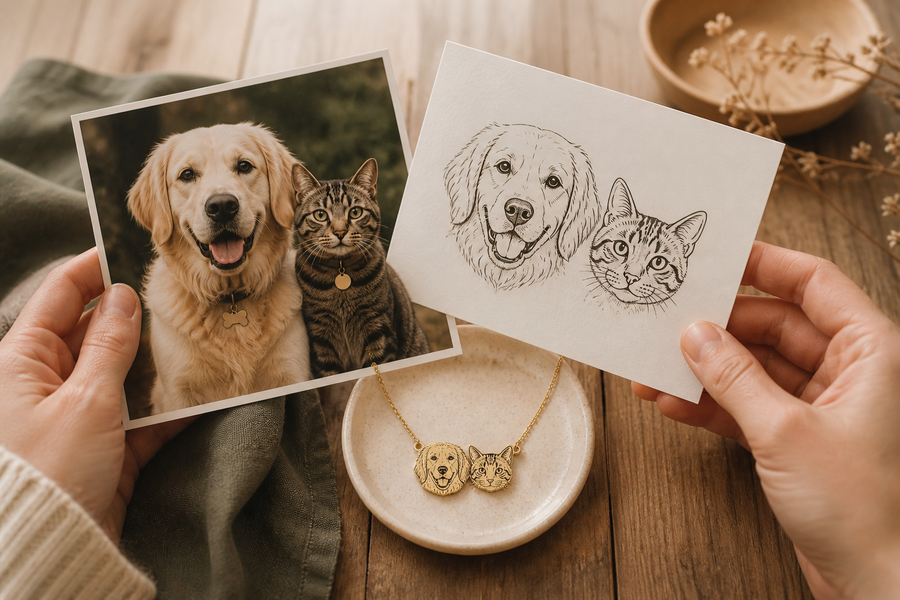
How to describe a likeness problem clearly, compare the portrait with the source photo, and use Animorie’s one-time redraw and ...
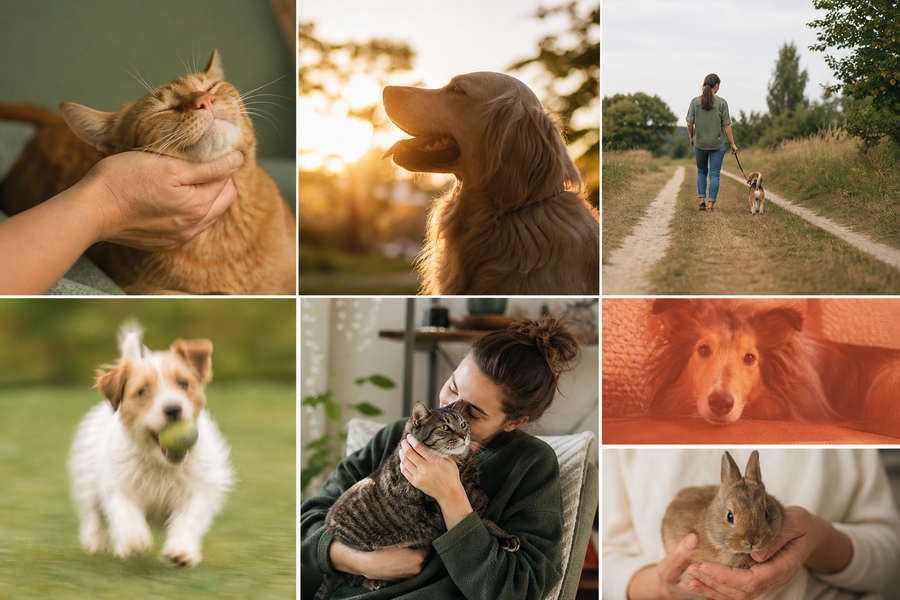
Seven avoidable source-photo problems that hide facial structure, change color, remove markings, or reduce the detail available...
How facial recognition, posture, coat pattern, final size, and source-photo quality affect the choice between head and full-bod...
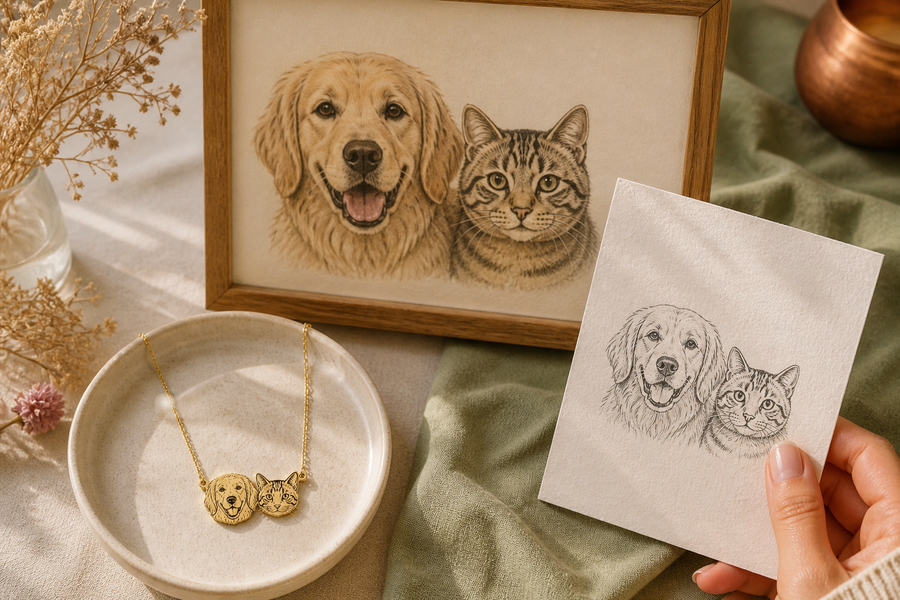
A decision guide comparing wearable, displayed, and permanent pet portraits by visibility, portability, commitment, and source ...
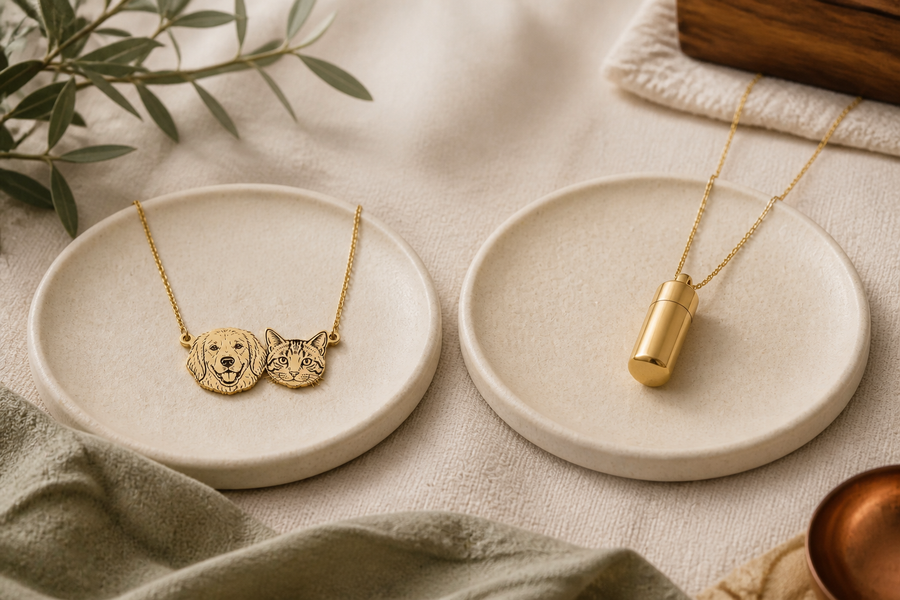
How portrait memorial necklaces and urn necklaces differ in purpose, contents, handling, privacy, and decision timing.
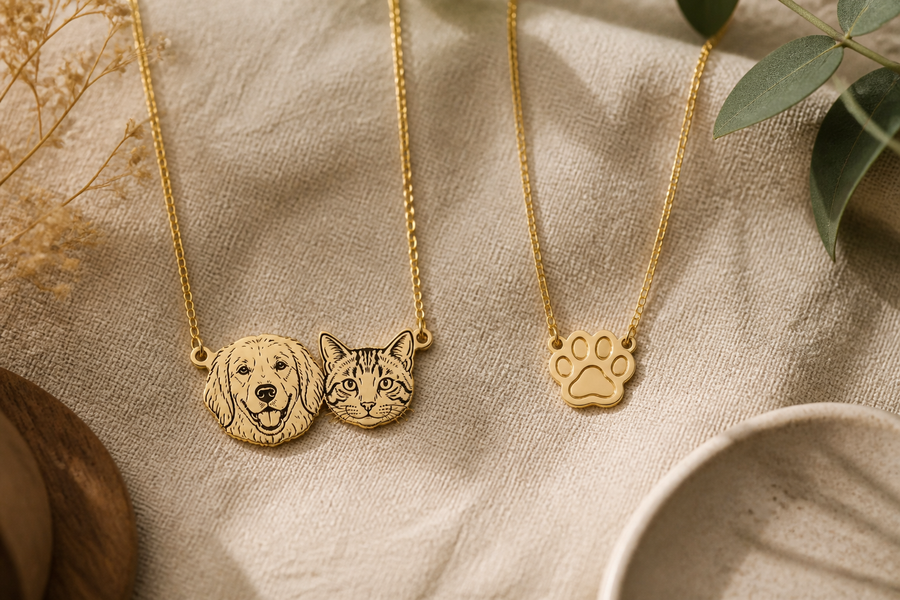
A practical comparison of portrait and paw print necklaces based on source material, visual recognition, privacy, and everyday ...
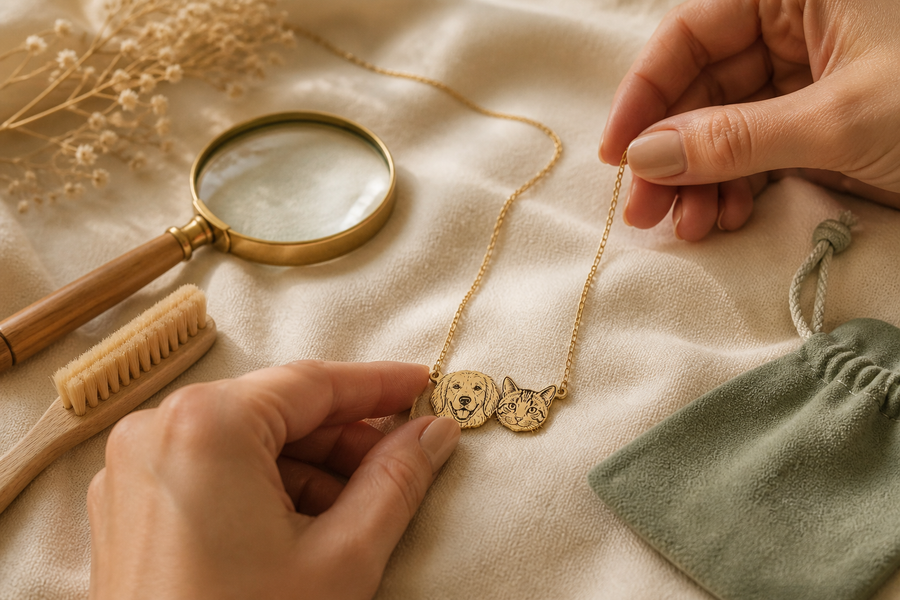
A pre-cleaning checklist for identifying material, finish, loose connections, residues, and methods that may damage fine portra...
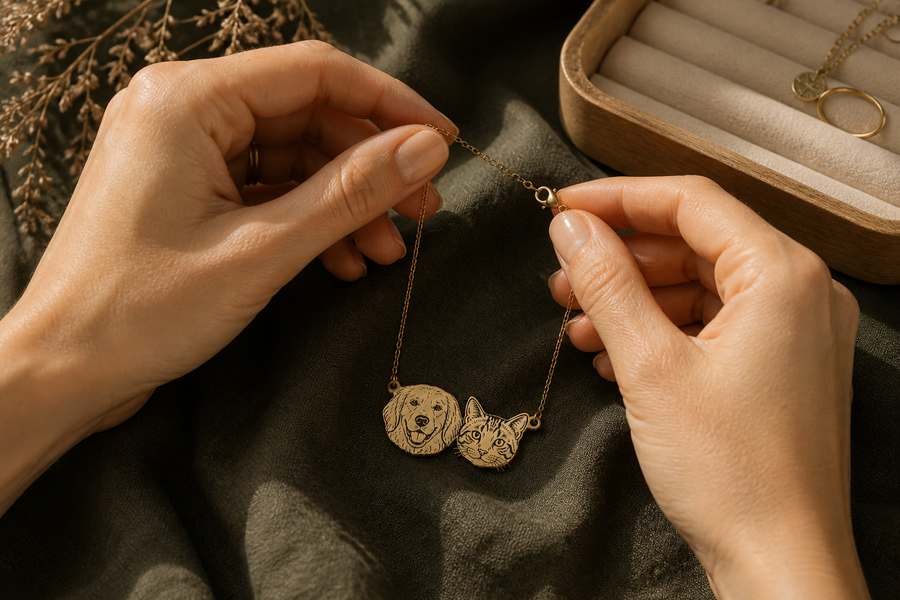
A gentle sequence for loosening chain knots and storing a portrait necklace so the pendant and connection points are protected.

How daily routines, moisture, clothing, chain checks, and emotional comfort affect everyday wear of a pet memorial necklace.
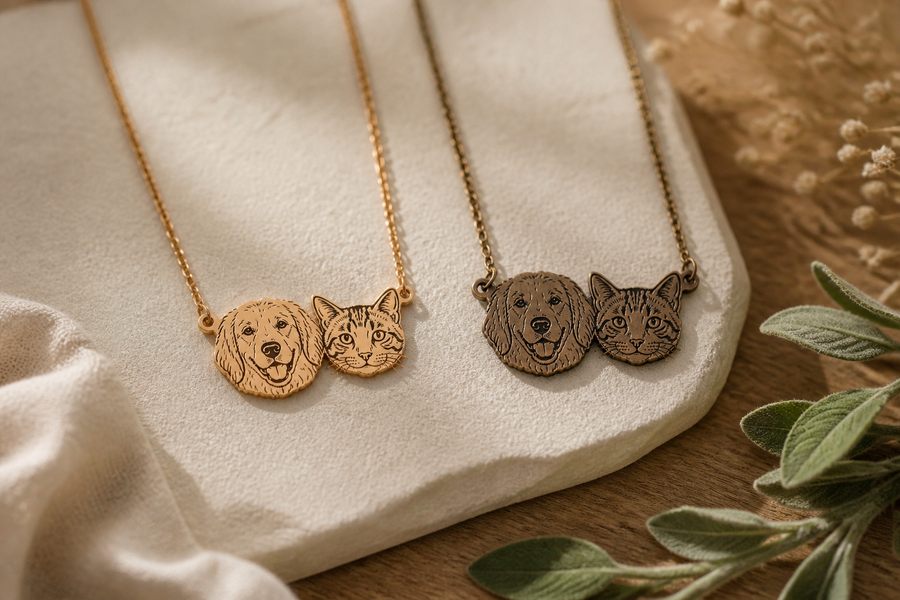
What copper patina is, why fingerprints and the environment affect color, and why gentle product-specific care matters.
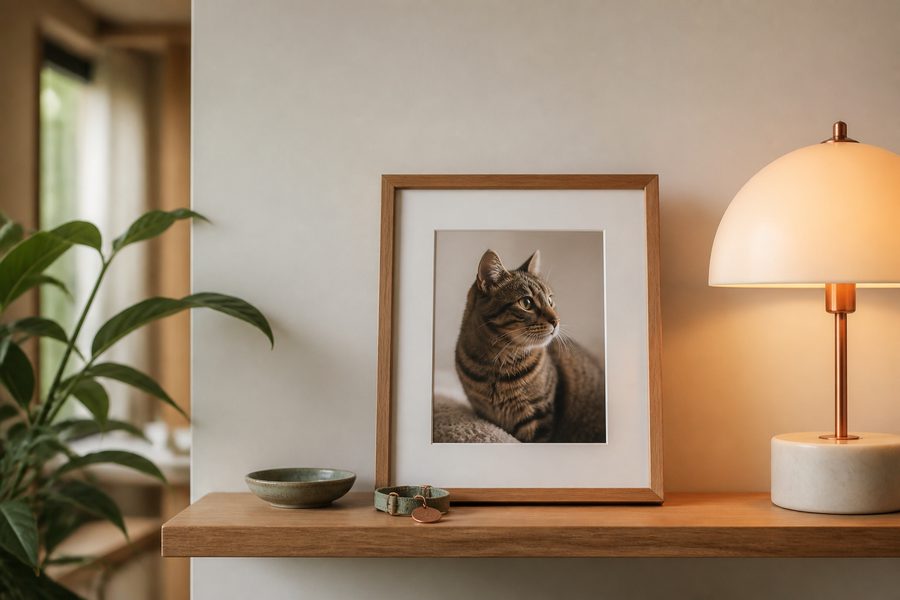
Ideas for arranging one photograph and a few meaningful objects in a small, livable space that can change over time.
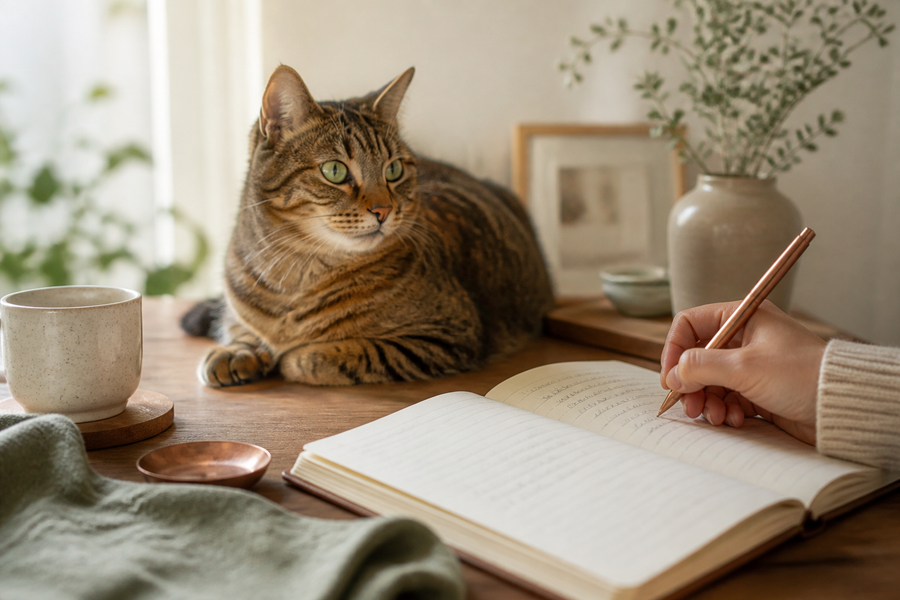
A short writing method that records what happened before and after a favorite pet photo, including sounds, routines, and detail...
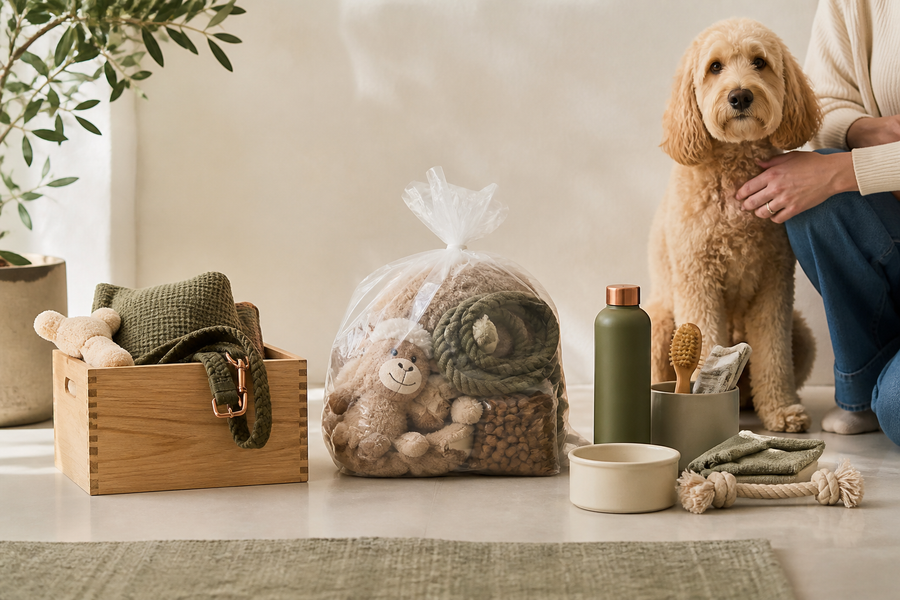
A low-pressure way to sort pet belongings by memory, practical use, and emotional weight without making every decision at once.
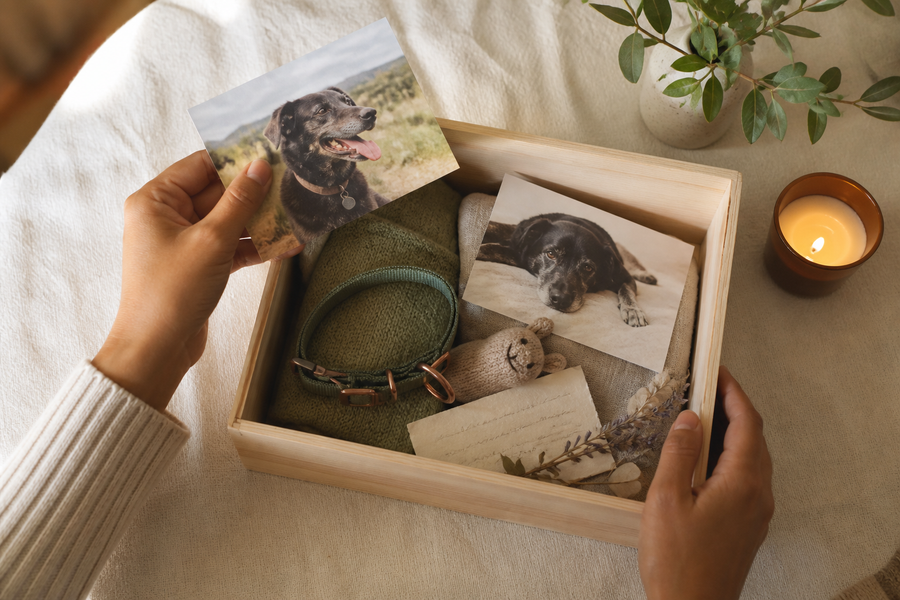
A calm, practical method for choosing, protecting, and arranging a few meaningful pet belongings without trying to save everyth...
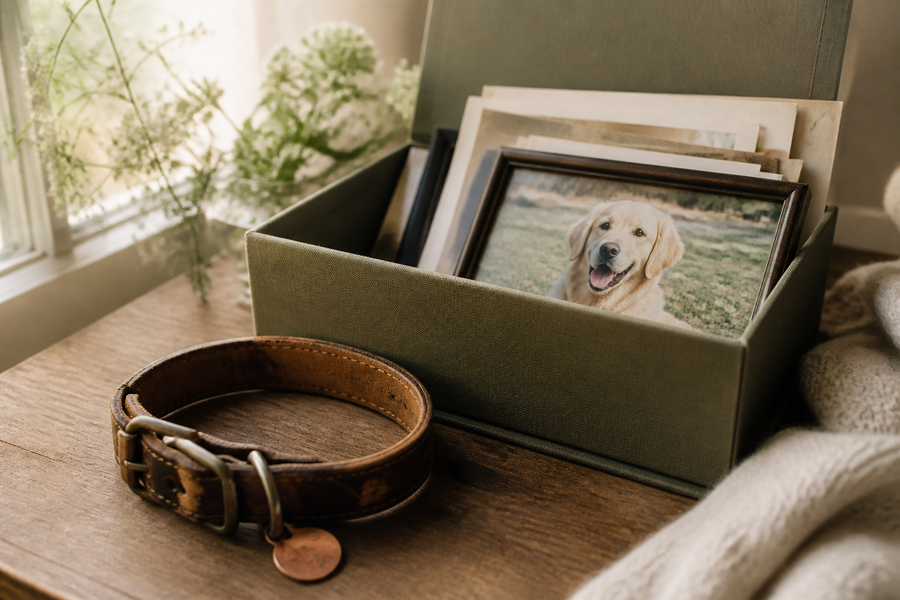
Practical options for keeping, displaying, storing, photographing, or letting go of a pet collar without rushing the decision.
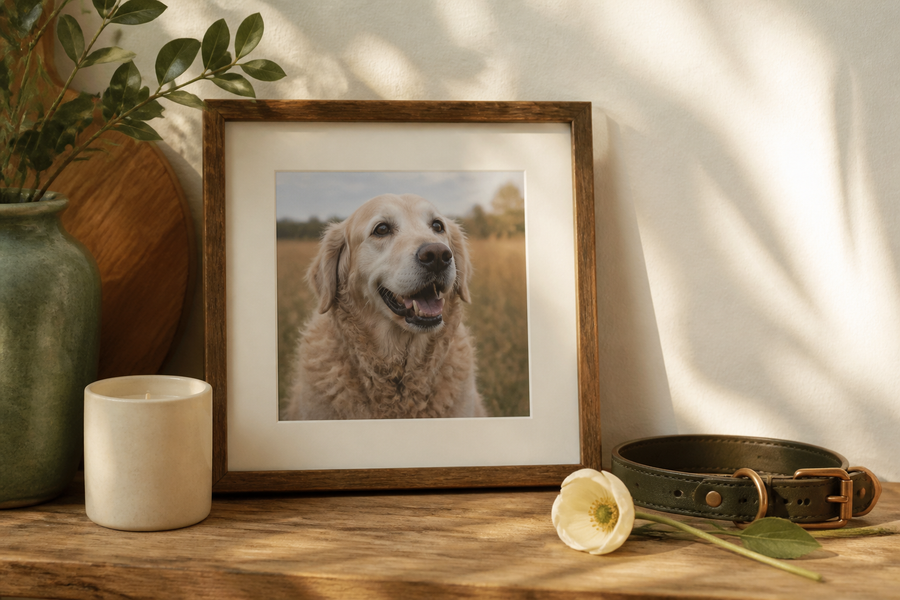
Gentle, low-pressure ways to mark a pet’s birthday or adoption anniversary after they are gone.
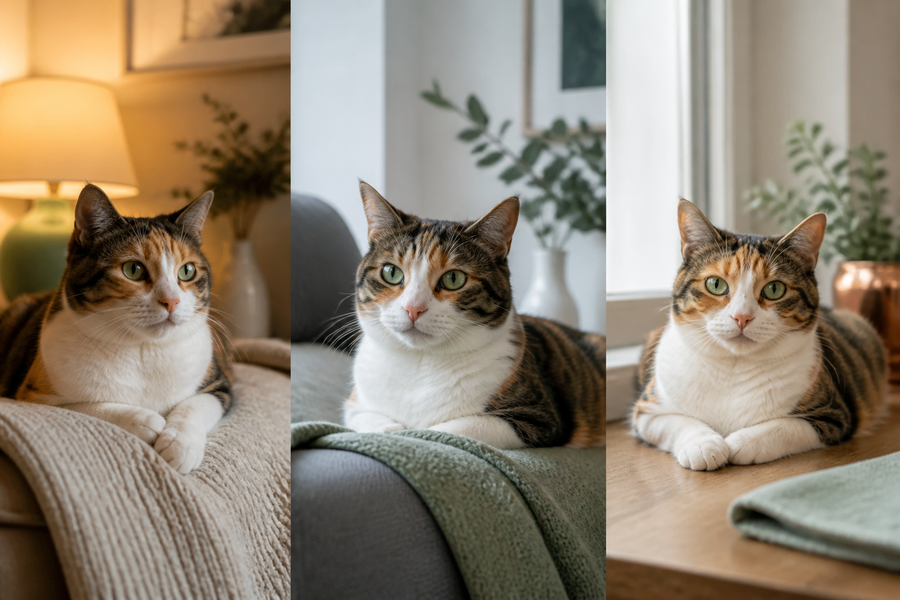
Why window light, household bulbs, shade, and filters can make the same coat look different—and how to choose the most truthful...

When cropping helps a pet portrait reference, what details to leave around the face, and why the original file should always be...
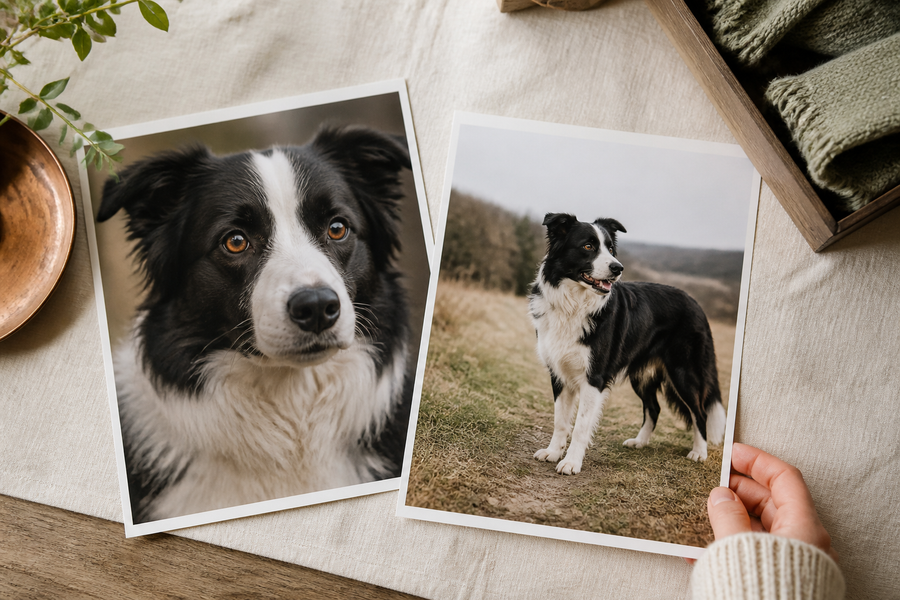
How framing changes the amount of facial information available for a small custom portrait necklace.
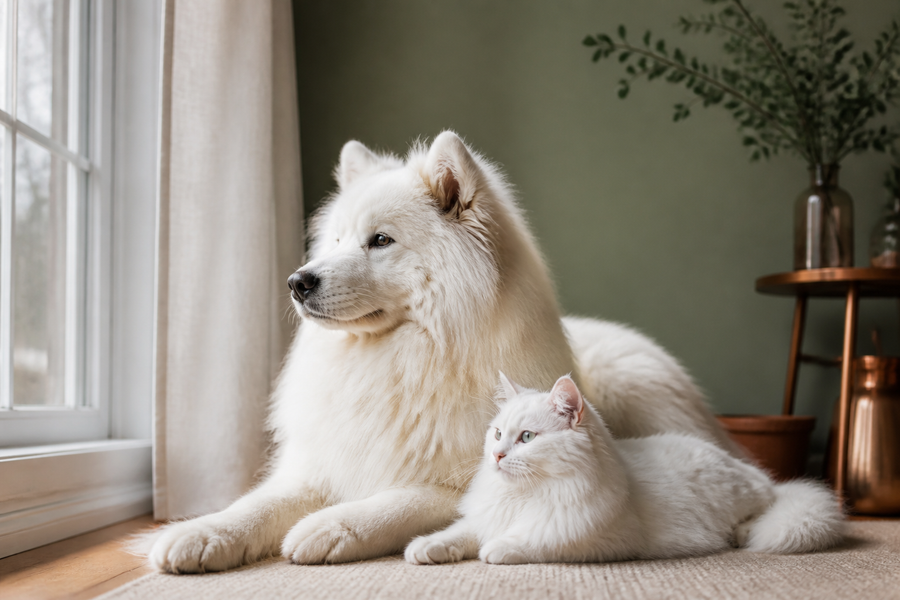
Simple exposure, background, and lighting choices that keep white fur textured instead of turning it into a bright blank area.
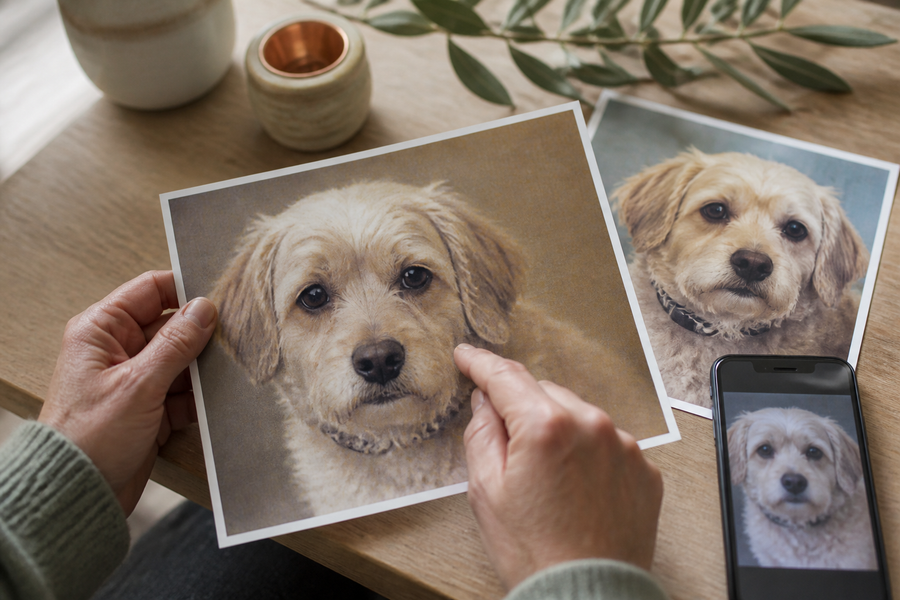
How to assess an imperfect pet photo before using it for a custom portrait, and when a second reference may help.
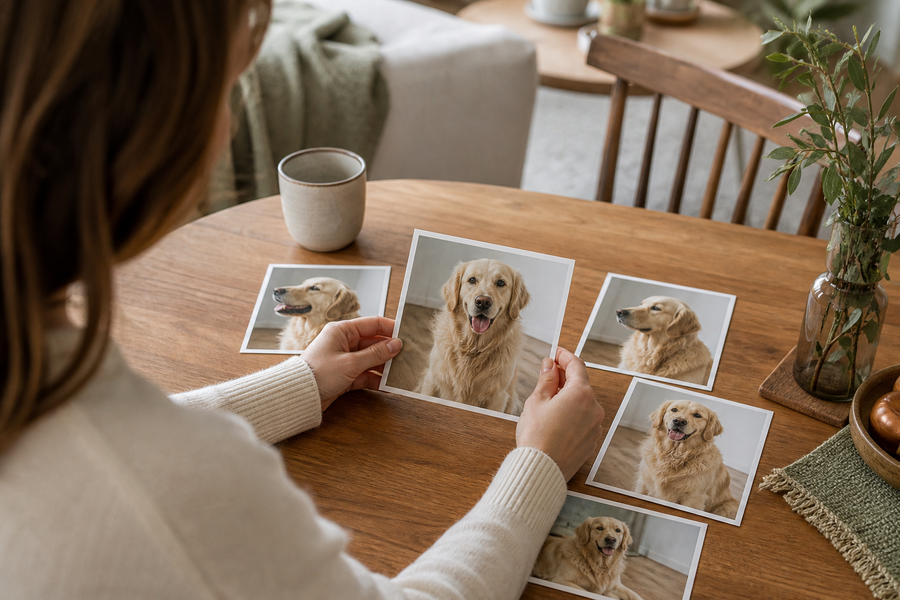
A practical way to choose one recognizable pet photo without confusing emotional importance with portrait clarity.

A specific, gentle inventory of sounds, expressions, textures, preferences, signals, and shared shorthand.